
Coldest January in nine years in Austria's lowlands
Preliminary January summary from GeoSphere Austria: Coldest January since 2017 in the lowlands and since 2021 in the mountains. Relatively dry and sunny in most of Austria.
‘Compared to the recent past, January 2026 was significantly too cold. Around 40 years ago, however, it would have been a fairly normal January in terms of temperatures,’ says climatologist Alexander Orlik from GeoSphere Austria.
In the preliminary monthly summary, January 2026 in the lowlands of Austria was 1.7 °C below the average January in the recent past (climate period 1991-2020), and in the mountains it was 0.6 °C too cold.
Compared to the climate period from 1961 to 1990, however, January 2026 in the lowlands of Austria was only 0.3 °C below average, and in the mountains it was 0.6 °C too warm.
‘Compared to all Januaries since measurements began, 2026 ranks exactly in the middle for Austria's lowlands. Since measurements began in 1768, around 50 per cent of all Januaries have been colder than 2026 and around 50 per cent warmer,’ says climatologist Orlik. ‘The situation is similarly balanced in the mountains: since the start of the summit measurement series in 1851, around 60 per cent of all Januaries in Austria have been colder than 2026 and around 40 per cent warmer.’
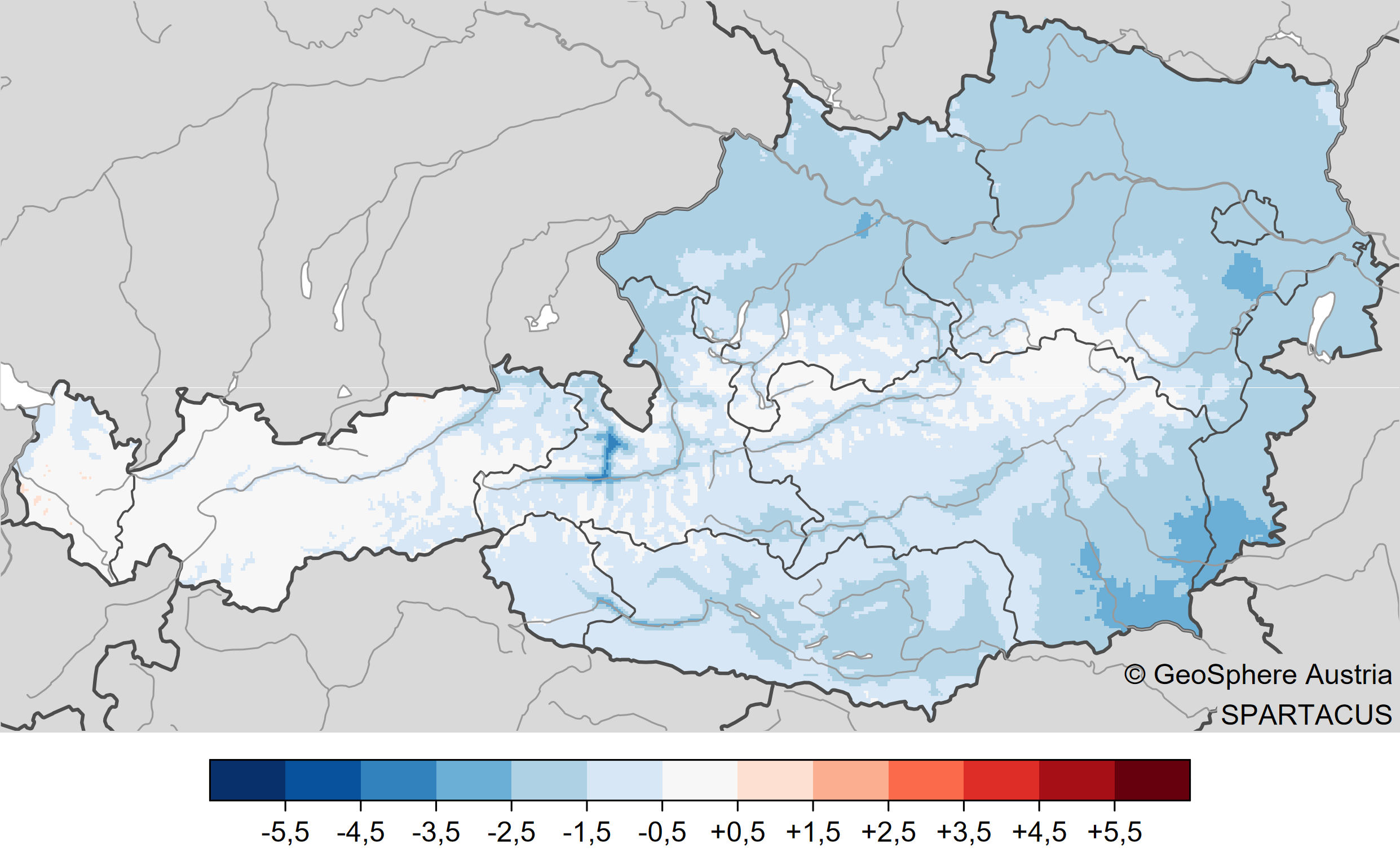
January_2026_Temp.png
Temperature in January 2026: deviation of temperature from the mean. Bottom image compared to the 1961–1990 mean, top image compared to the 1991–2020 mean. Analysis using SPARTACUS data up to and including 28 January 2026. © GeoSphere Austria.
The preliminary evaluation of days of frost (all-day temperatures below 0 °C) also shows how cold January 2026 was in the lower-lying areas of Austria compared to the recent past:
Below 500 metres above sea level, January 2026 brought an average of 42 per cent more ice days across Austria than in an average January between 1991 and 2020. Between 500 and 1,000 metres above sea level, there were 8 per cent more ice days than average.
The regional analysis shows significantly more persistent frost in the east than in the west. For example, below 500 metres above sea level in Burgenland, there were 82 per cent more ice days than the average in the recent past, while in Vorarlberg there were 2 per cent fewer.
In locations above 1,000 metres above sea level, however, January 2026 brought an average to slightly above-average number of frost days across Austria.
Across Austria, January 2026 brought 25 per cent more hours of sunshine than the long-term average. The last time there were more hours of sunshine in January was in 2024 (+39 per cent).
The regional analysis shows that it was not above-average sunny everywhere in Austria. In the area from Vienna to Burgenland and southern Styria, the number of hours of sunshine in January 2026 was 10 to 35 per cent below the long-term average.
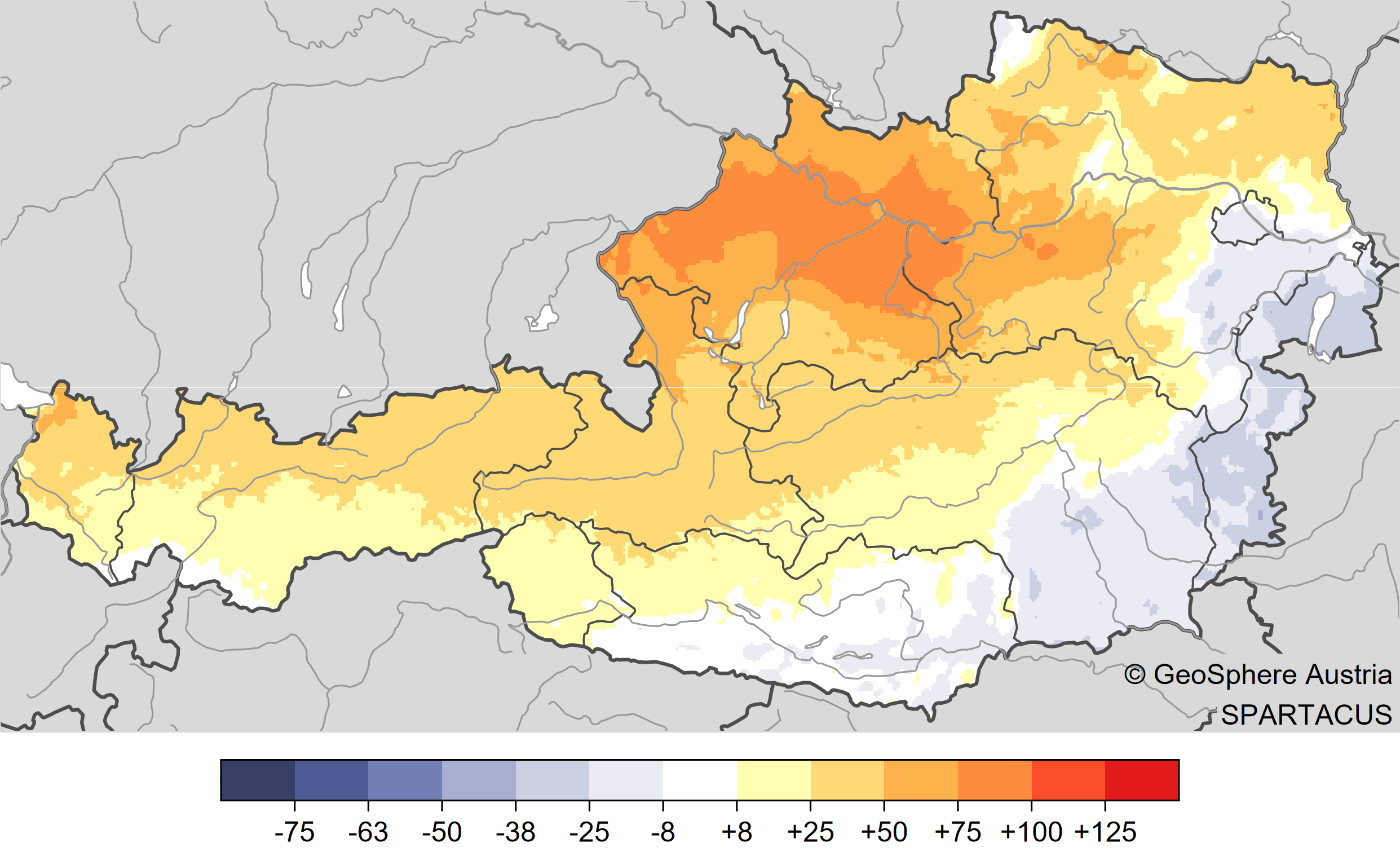
January_2026_sun.png
Sunshine duration in January 2026: deviation of sunshine duration: image below compared to the 1961-1990 average, image above compared to the 1991-2020 average. Evaluation with SPARTACUS data up to and including 28 January 2026. © GeoSphere Austria.
January 2026 was relatively dry. Across Austria as a whole, precipitation in January 2026 was 30 percent below the long-term average. This was similar to the low precipitation levels seen in January 2025. January 2020 was significantly drier, with 58 percent less precipitation than the long-term average.
The dry weather so far this winter is also responsible for the significantly below-average snow depths for January.
However, the number of days with snow cover is normal to slightly above average for January in many regions. This is because the cold weather meant that the snow that fell remained on the ground for a long time.
For example, in January 2026, there were 19 days with snow cover of at least one centimetre in Eisenstadt, compared to the long-term average of 10 days. In Innsbruck, there were 19 days with snow cover this January, compared to an average of 19 days in January. In Klagenfurt, there were 20 days with snow cover, compared to a long-term average of 18 days.
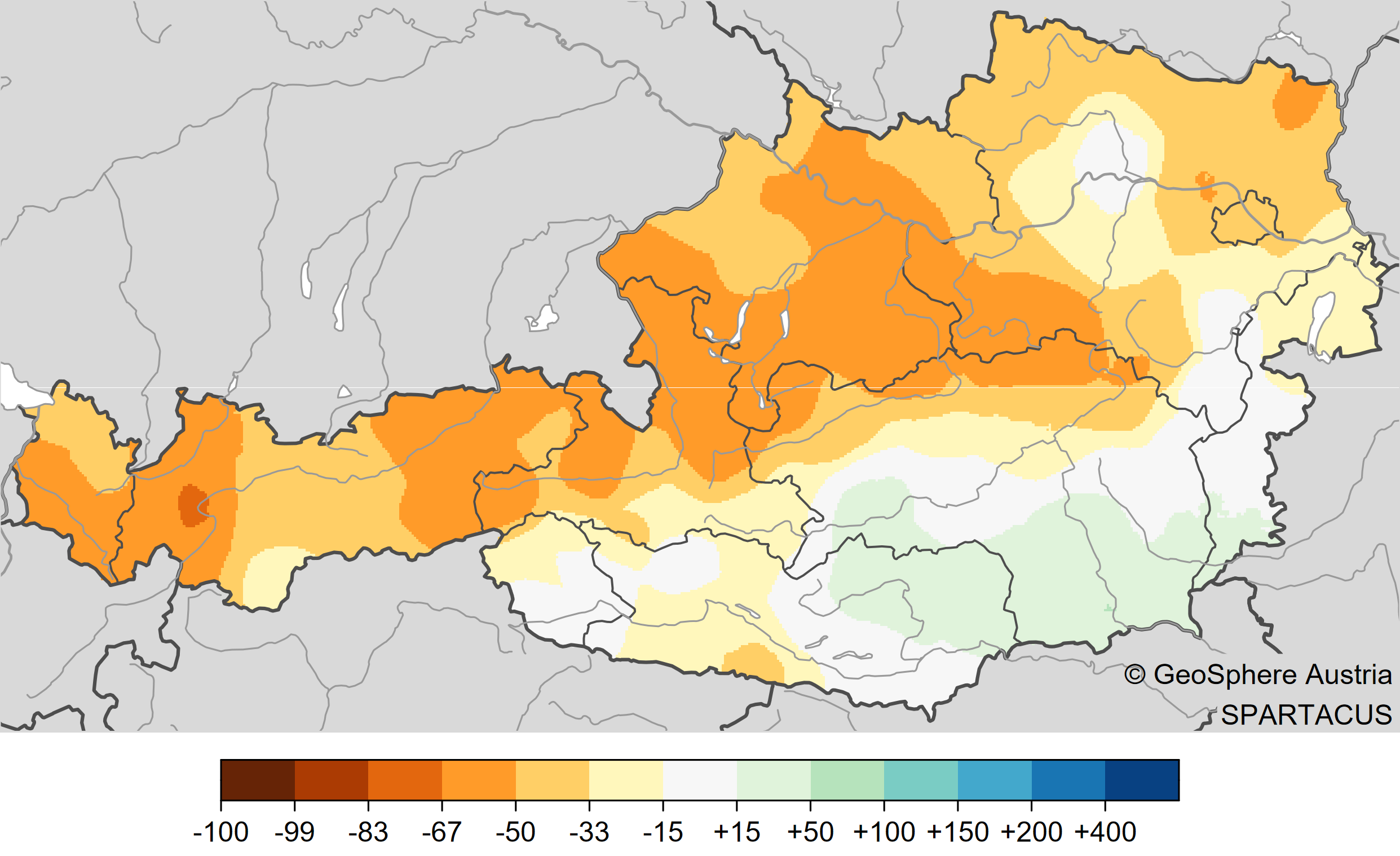
January_2026_precipitation.png
Precipitation in January 2026: deviation of precipitation from the average: image below compared to the average for 1961-1990, image above compared to the average for 1991-2020. Evaluation with SPARTACUS data up to and including 28 January 2026. © GeoSphere Austria.
Translated with DeepL.com (free version)