
GeoSphere Austria: September unusually warm – rainfall has only slightly alleviated the drought
GeoSphere Austria’s preliminary September report: September marked the end of an extremely prolonged spell of midsummer weather in Austria. Temperatures rose well above 30 degrees even in the ninth month of the year. The good news: rainfall finally arrived across almost the whole country. As a result, the drought has at least not worsened.
On 8 September 2026, a temperature of 34.7 degrees was recorded at the GeoSphere Austria monitoring station in Pottschach (Lower Austria). One day later, the 30-degree mark was exceeded for the last time. Consequently, 171 of around 280 active GeoSphere Austria weather stations set a new annual record for the number of hot days (at least 30.0 degrees). ‘The old station records were exceeded by an average of 25 per cent. The highest number of hot days in September – namely five – was recorded in Güssing (B) and Bad Radkersburg (ST),’ summarised GeoSphere Austria climatologist Alexander Orlik. From 10 September onwards, temperatures returned to normal; nevertheless, it was the 14th warmest September in the 260-year history of weather records. Nevertheless, the first sub-zero temperatures had already been recorded in inhabited areas: at the GeoSphere Austria station in Schwarzau/Freiwald (Upper Austria), a temperature of minus 4.4 degrees was recorded on 23 September.
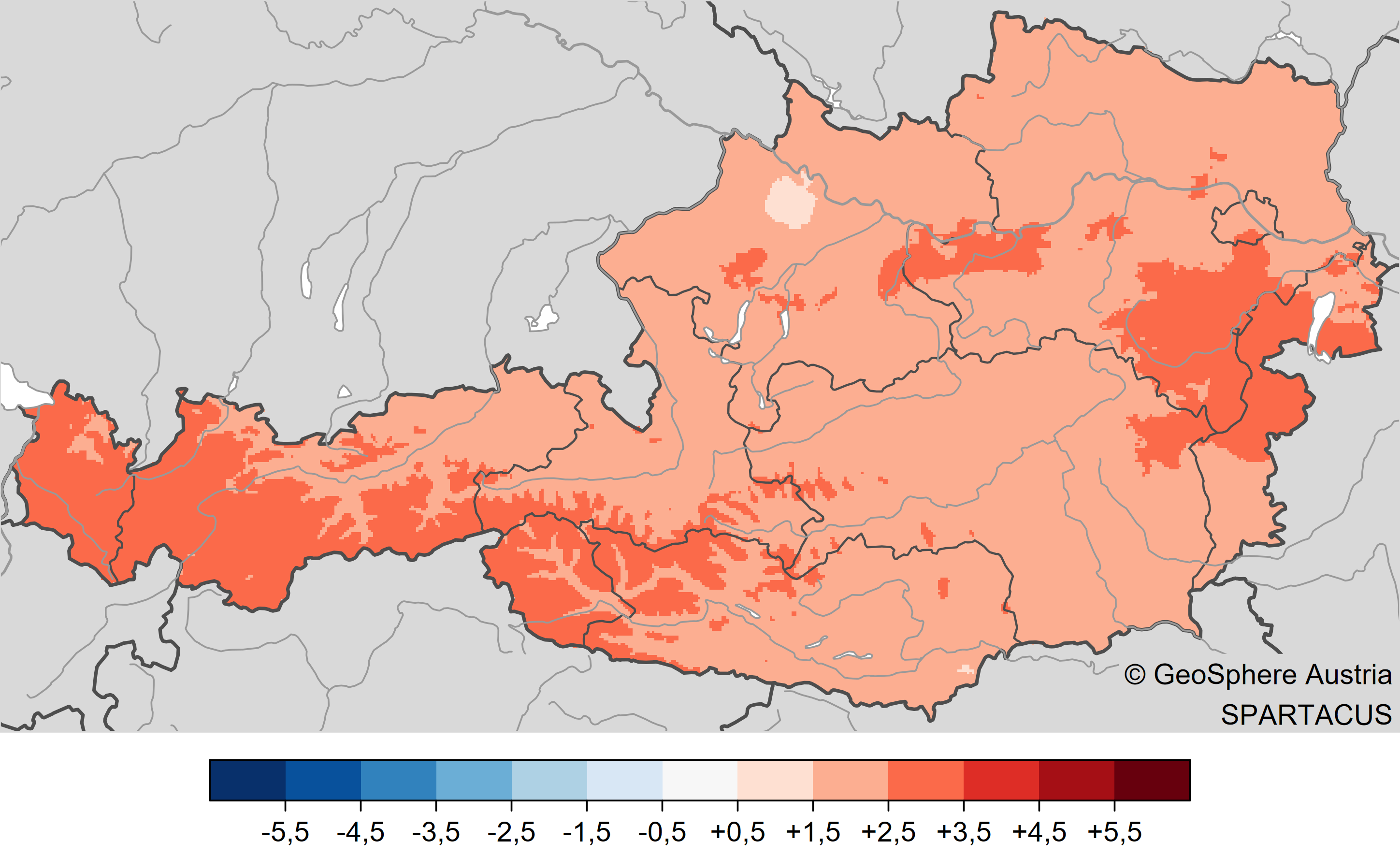
September2026_Temp1961-1990.png
Temperature trends in September 2026 compared with the long-term average from 1961 to 1990. © GeoSphere Austria.
After three extremely dry summer months, regular rainfall finally returned in September. Nevertheless, the precipitation deficit stood at minus 26 per cent. ‘At least the prevailing drought did not worsen further, but the urgently needed heavy and widespread rainfall failed to materialise in September either,’ emphasised Orlik. The summer half-year of 2026 is thus one of the four with the lowest precipitation in the HISTALP precipitation series (beginning in 1858). Conditions remained very dry in September in Vorarlberg, the Arlberg region and the Tyrolean Außerfern, as well as from the Tennengau (S) through to Burgenland and on to the southern Vienna Basin. Precipitation deficits here ranged from 50 to 70 per cent. The driest place in Austria in September 2026 was Bad Radkersburg (ST), with a precipitation deficit of 75 per cent. In Lower Carinthia and parts of East Tyrol, by contrast, there was a precipitation surplus of 15 to 20 per cent.
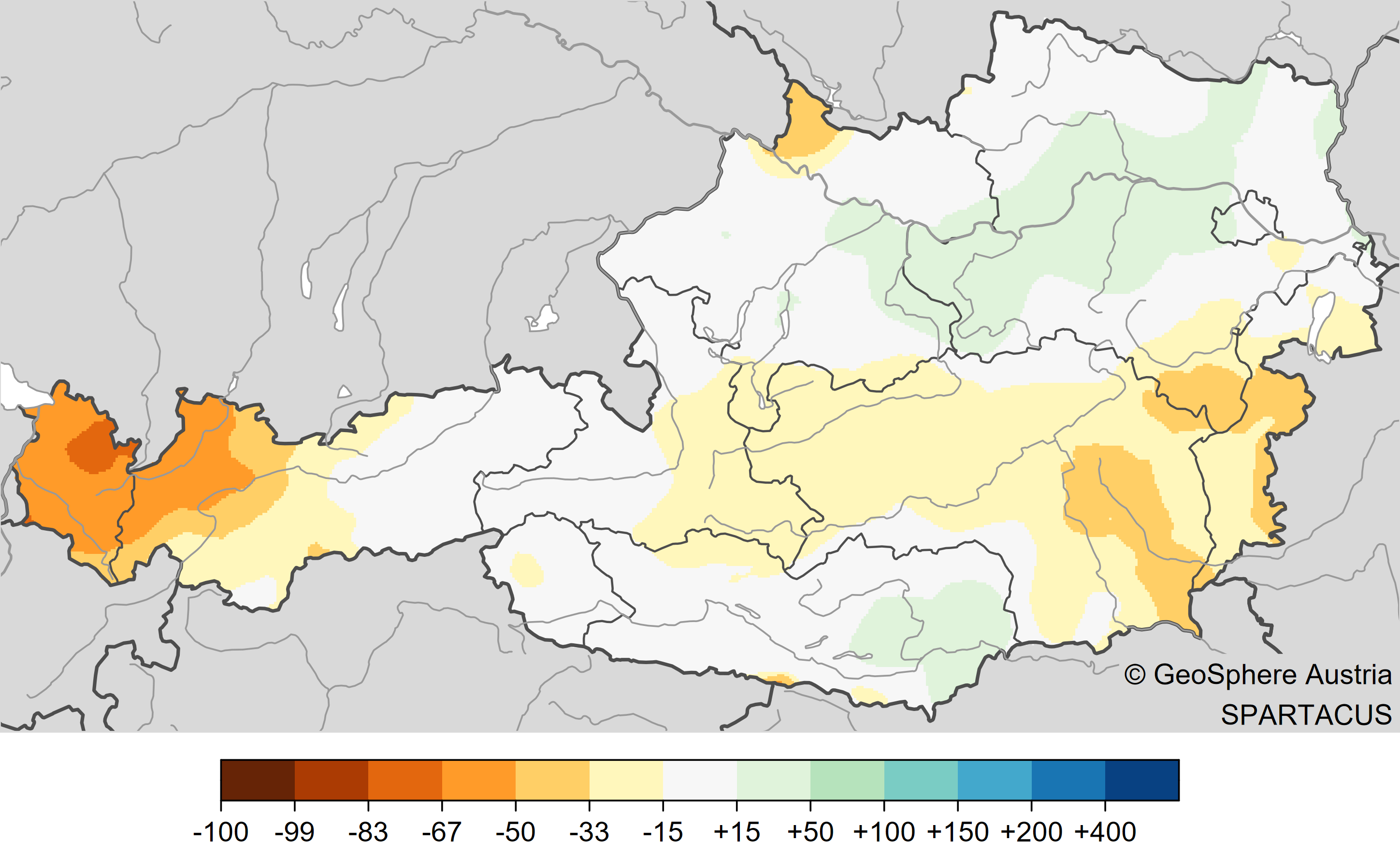
September2026_precipitation1961-1990.png
Precipitation trends in September 2026 compared with the long-term average for 1961 to 1990. © GeoSphere Austria.
High-pressure weather dominated in Austria in September. This meant few clouds and plenty of sunshine. Compared with the climate average for the years 1991 to 2020, there was 25 per cent more sunshine. The only September in recent times to be even sunnier was September 2023, with 44 per cent more sunshine.
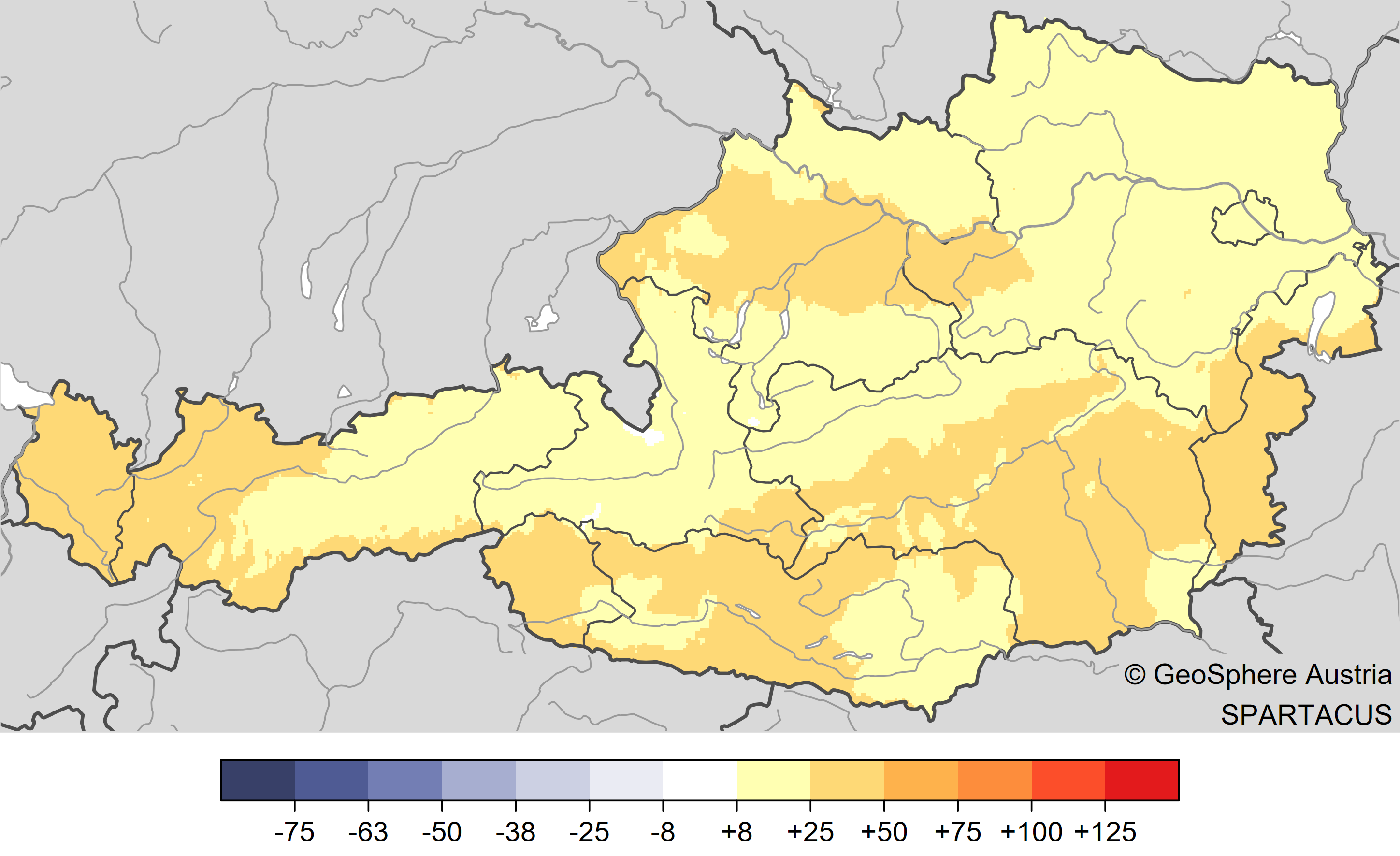
September_2026_sun1961-1990.png
Trend in hours of sunshine in September 2026 compared with the long-term average for 1961 to 1990. © GeoSphere Austria.
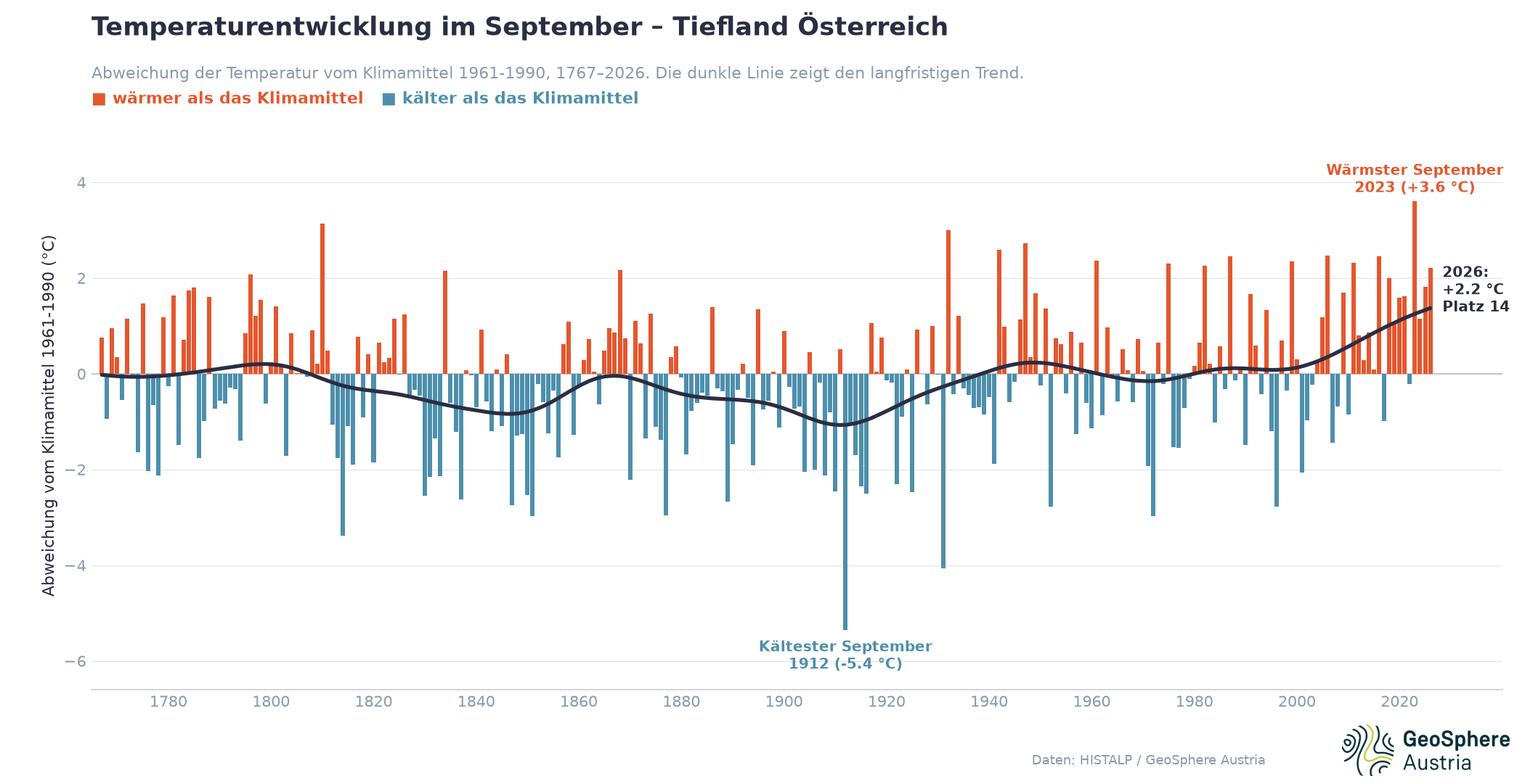
September2026_Temp_lowlands.png
Temperature trends (lowlands) in August compared with the long-term average for 1961 to 1990. © GeoSphere Austria.
Translated with DeepL.com (free version)