
Hottest summer on record: record temperatures at more than 100 GeoSphere Austria monitoring stations
The highest temperatures, the most hot days, the most tropical nights, two heatwaves each with peak temperatures exceeding 40 degrees, plus extreme drought: the meteorological summer of 2026 tops the record books.
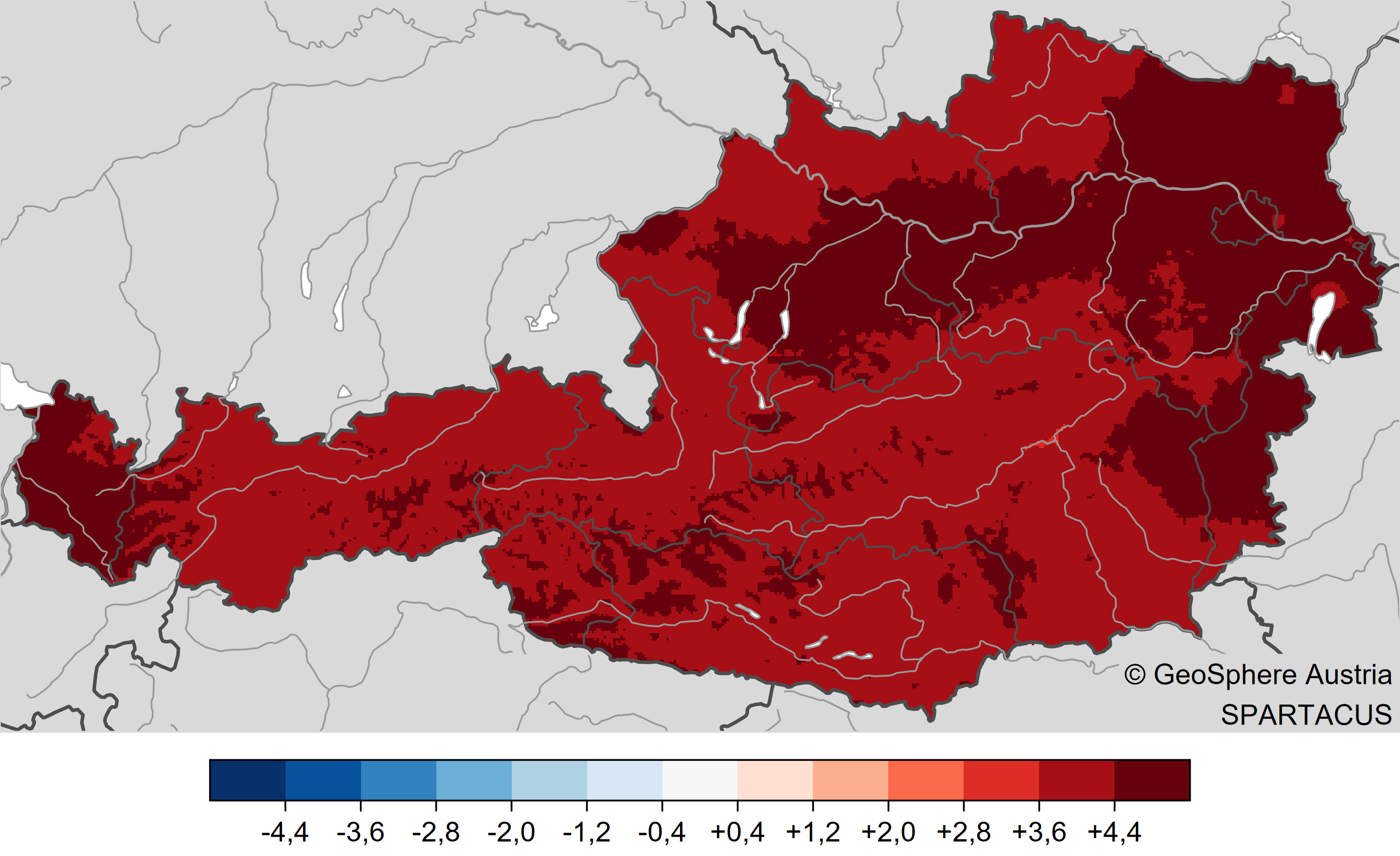
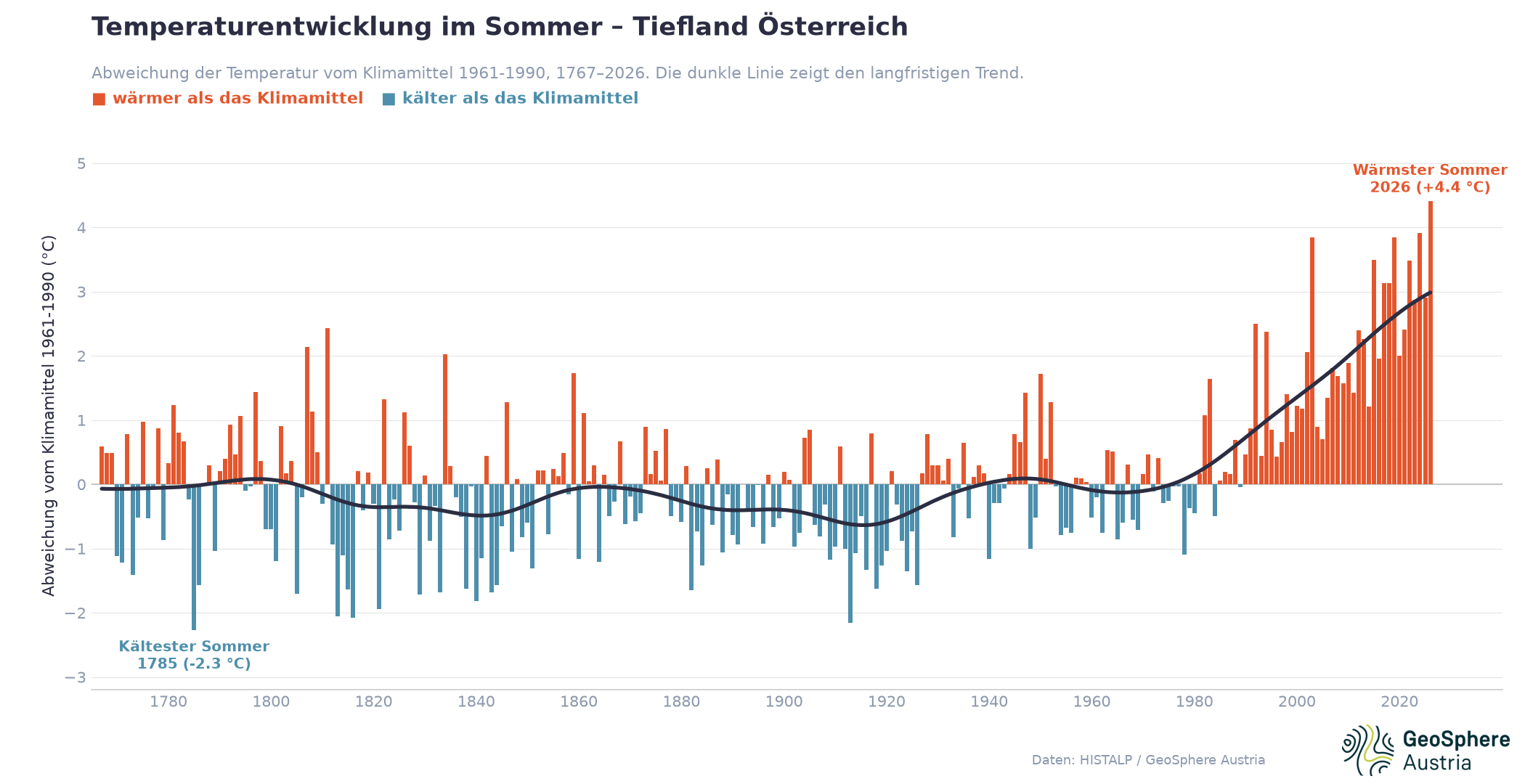
5 August 2026 marked a new chapter in Austrian meteorological history: for the first time, the 41-degree mark was exceeded. A host of new records clustered around this peak value, recorded by the GeoSphere Austria monitoring station near Bad Deutsch-Altenburg (Lower Austria). The average air temperature was 2.6 degrees above the 1991–2020 climate average and as much as 4.4 degrees above the 1961–1990 climate average. Beyond the statistics, the summer of 2026 will be remembered as far too hot and, above all, far too dry – a period that placed an enormous strain not only on people but also on the environment and nature.
‘It has now become difficult to find the right adjectives to describe the temperature conditions of the summer of 2026 within the context of Austria’s climatology. The daily maximum and minimum temperatures, the duration of the heatwaves, the sequence of hot days, the number of hot days, very hot days and tropical nights, as well as the low number of frost days in the high mountains, were all exceptional, extreme or unprecedented,’ summarises climatologist Alexander Orlik from GeoSphere Austria. For the first time ever, the 40-degree mark was reached in the month of June. The previous record high of 38.6 degrees (Waidhofen an der Ybbs, 20 June 2013) was surpassed by 18 weather stations between 27 and 29 June. With the exception of Carinthia, a new June temperature record was set in all other federal states.
In terms of temperatures, July was relatively calm at first. Towards the end of the month, however, another heatwave built up and swept across the whole of Austria. The 40.3 degrees recorded on 31 July in Wieselburg (Lower Austria) effectively marked the start of a series of temperature records that were to be broken in the days that followed. The peak came on 3, 4 and 5 August, when the 40-degree mark was exceeded on each of these days. With 41.2 degrees in Bad Deutsch-Altenburg (Lower Austria), the highest temperature ever recorded in Austria was reported on 5 August.
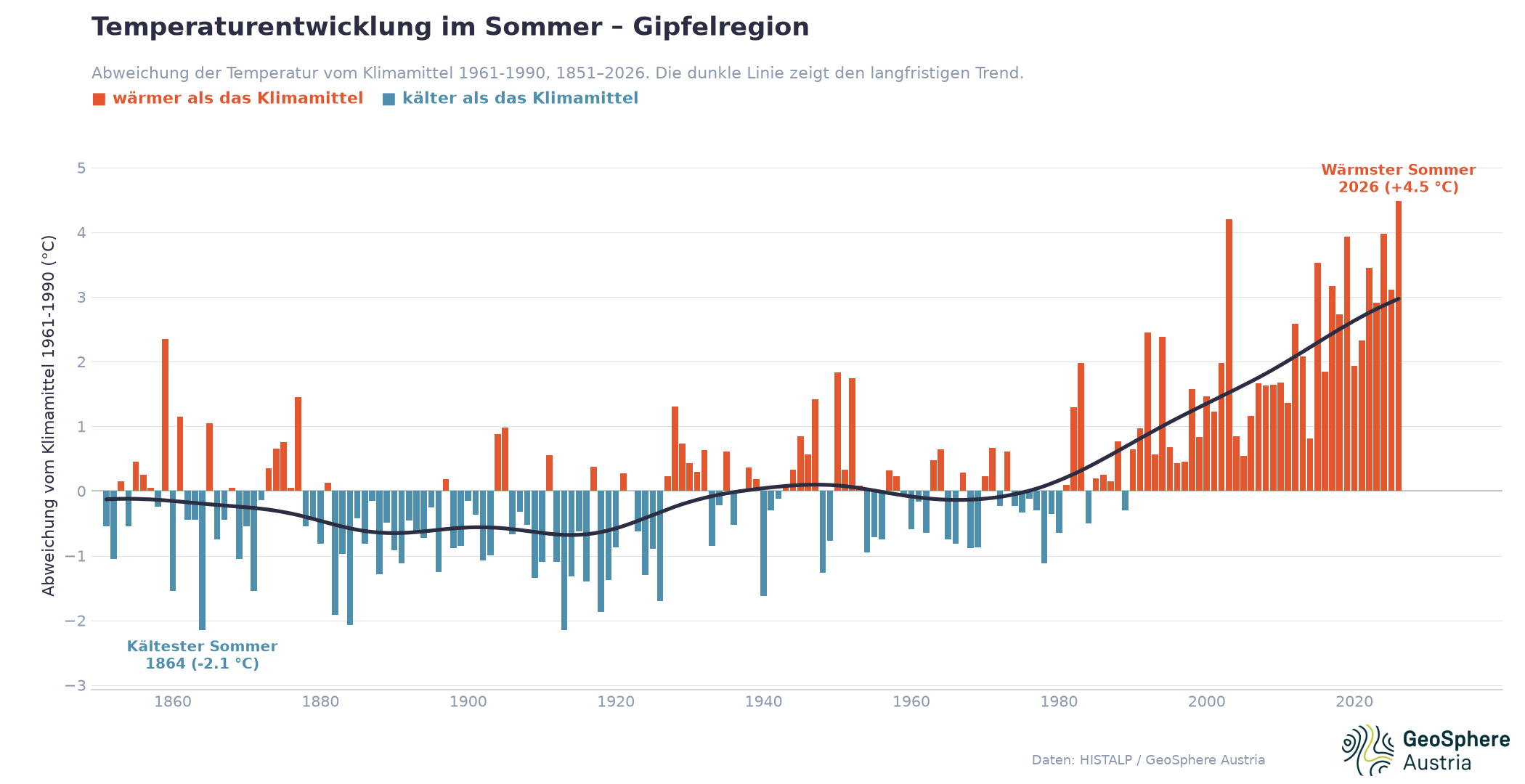
For the first time, the 40-degree mark was not a one-off event. At ten GeoSphere Austria monitoring stations, maximum temperatures of 40 degrees and above were recorded on a total of six days. New annual records were set at 103 stations, including 59 monitoring points that set a new record in each of the three summer months. At 157 weather stations, a new record was also set for the number of hot days – that is, days on which the temperature reached or exceeded 30 degrees. With 44 hot days, the previous station record in Feldkirch (V) from the summer of 2015 was surpassed by 17 (!) days. The highest number of hot days – 55 in each case – occurred in the summer of 2026 in Bad Deutsch-Altenburg (Lower Austria), Ferlach and St. Andrä im Lavanttal (both in Carinthia). At altitudes below 500 metres above sea level, the Austrian average of 42 hot days represented a 170 per cent increase on the climate average. Between 500 and 1,000 metres, there were 27 hot days – four times as many as in an average summer. A new record for very hot days (35 degrees and above) was set at 93 weather stations. The ten warmest summers all occurred in the 21st century (2026, 2024, 2019, 2003, 2015, 2022, 2017, 2018, 2025, 2023). In the mountains, the number of frost days (zero degrees and below) has fallen dramatically.
Summer2026_Temp_compare61-90.png
Temperature trends compared with the long-term average from 1961 to 1990. © GeoSphere Austria.
Summer2026_Temp_compare91-20_lowlands.png
Temperature trends (lowlands) in summer compared with the long-term average from 1961 to 1990. © GeoSphere Austria.
Summer2026_Temp_compare91-20_mountains.png
Temperature trends (mountain peaks) in summer compared with the long-term average from 1961 to 1990. © GeoSphere Austria.
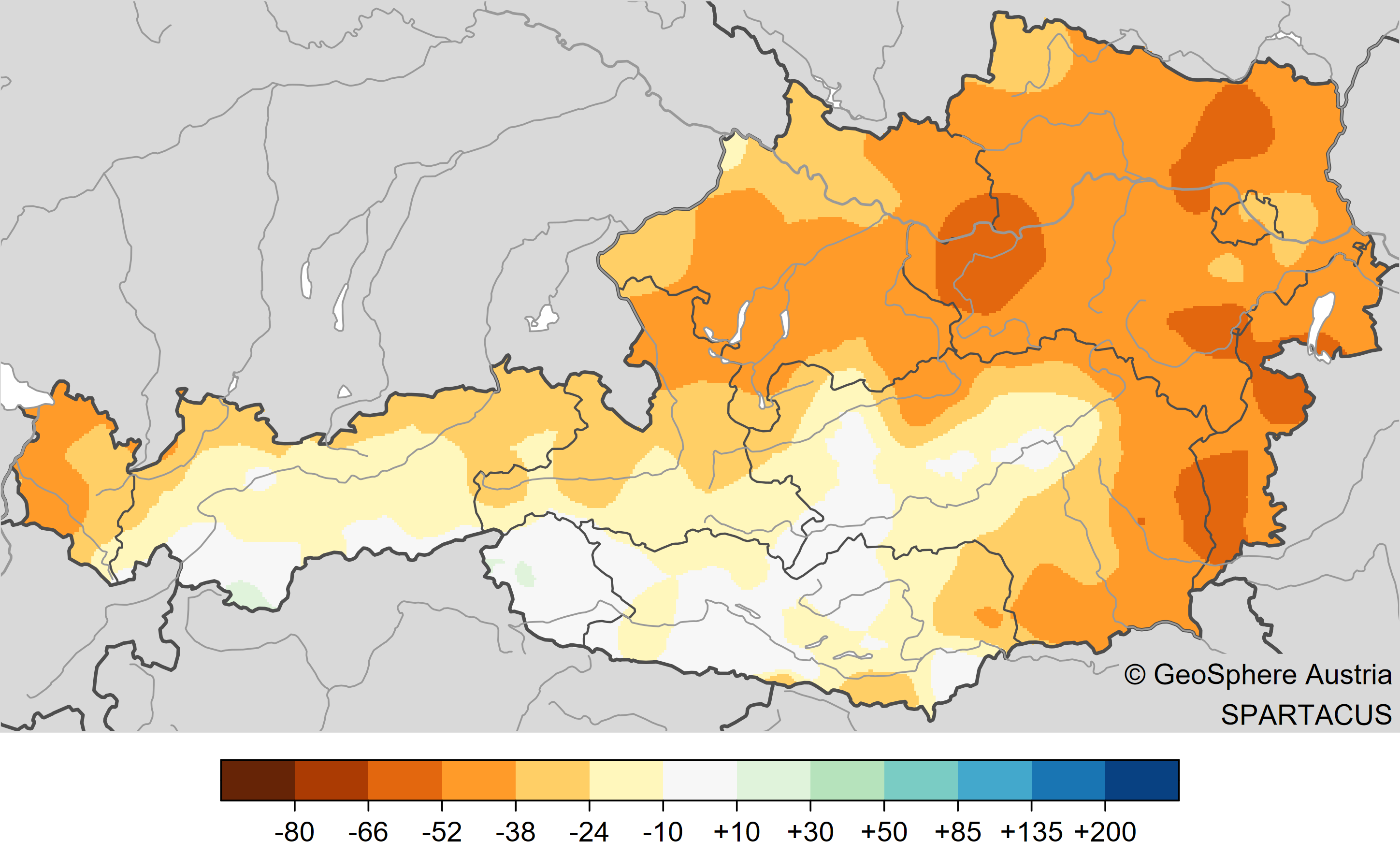
In Austria, rainfall in the summer of 2026 was down by a third. This makes it one of the five driest summers since records began in 1858. ‘What makes the rainfall deficit of the summer of 2026 so dramatic, however, is the preceding spring, which saw around half as much rainfall,’ explains climatologist Alexander Orlik. ‘The extreme heat, combined with the dry air, caused the rate of evaporation to rise sharply, which in turn led to a lack of water in the soil and low water levels in the rivers. In the country’s 169-year history of record-keeping, there has never been so little rainfall in the first eight months of a year. The occasional heavy rainfall events that occurred across the country during the summer did little to alleviate the extreme drought,’ adds Orlik. The situation was particularly dramatic in the north-eastern Waldviertel and the northern Weinviertel, where the rainfall deficit reached up to 70 per cent.
Summer2026_precipitation_compare61-90.png
Precipitation trends compared with the long-term average from 1961 to 1990. © GeoSphere Austria.
Translated with DeepL.com (free version)
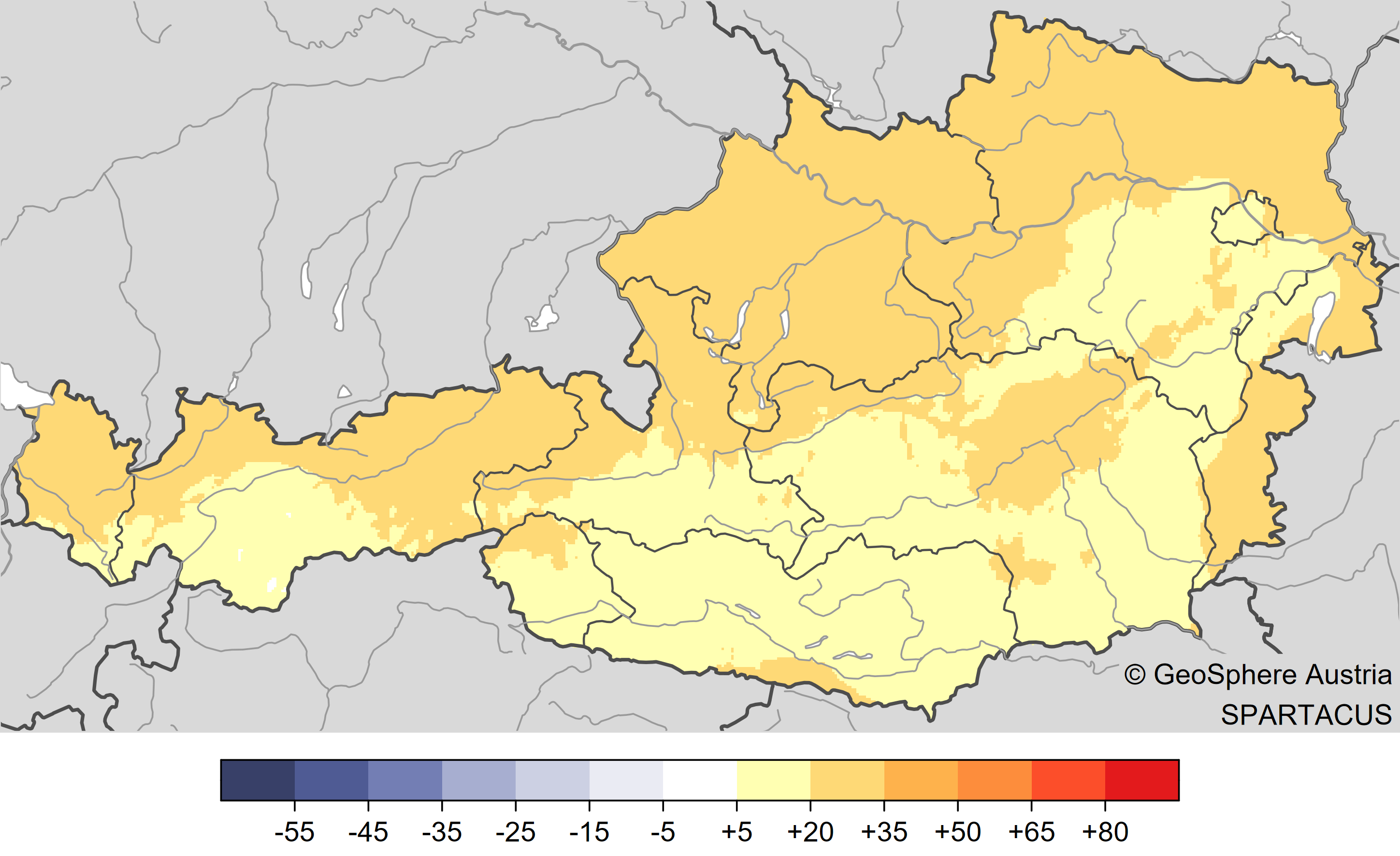
Summer2026_sun_compare61-90.png
Sunshine duration compared with the long-term average from 1961 to 1990. © GeoSphere Austria.