
International Day in Memory of The Victims of Earthquakes
Understanding earthquakes, reducing risks, protecting lives
On 29 April 2025, the United Nations (UN) General Assembly, at the initiative of the governments of Chile, the Philippines and Uzbekistan, proclaimed 29 April as the International Day of Remembrance for Earthquake Victims. The aim of this day is to commemorate those who have lost their lives in earthquakes, whilst raising awareness of earthquake risks and preventive measures.
In connection with this day of remembrance, the scientific association IASPEI (International Association of Seismology and Physics of the Earth’s Interior), as part of the International Union of Geodesy and Geophysics (IUGG), has also highlighted the central role of seismology in earthquake preparedness and called for increased education and awareness-raising measures.
Earthquake preparedness includes, amongst other things, household preparations, early warning systems, information for the public on how to behave (see the guide to behaviour under further links) during an earthquake, and the rapid response of emergency services following an event.
Earthquakes cannot be prevented – however, their impact can be significantly reduced through scientific understanding, continuous monitoring and appropriate preventive measures.
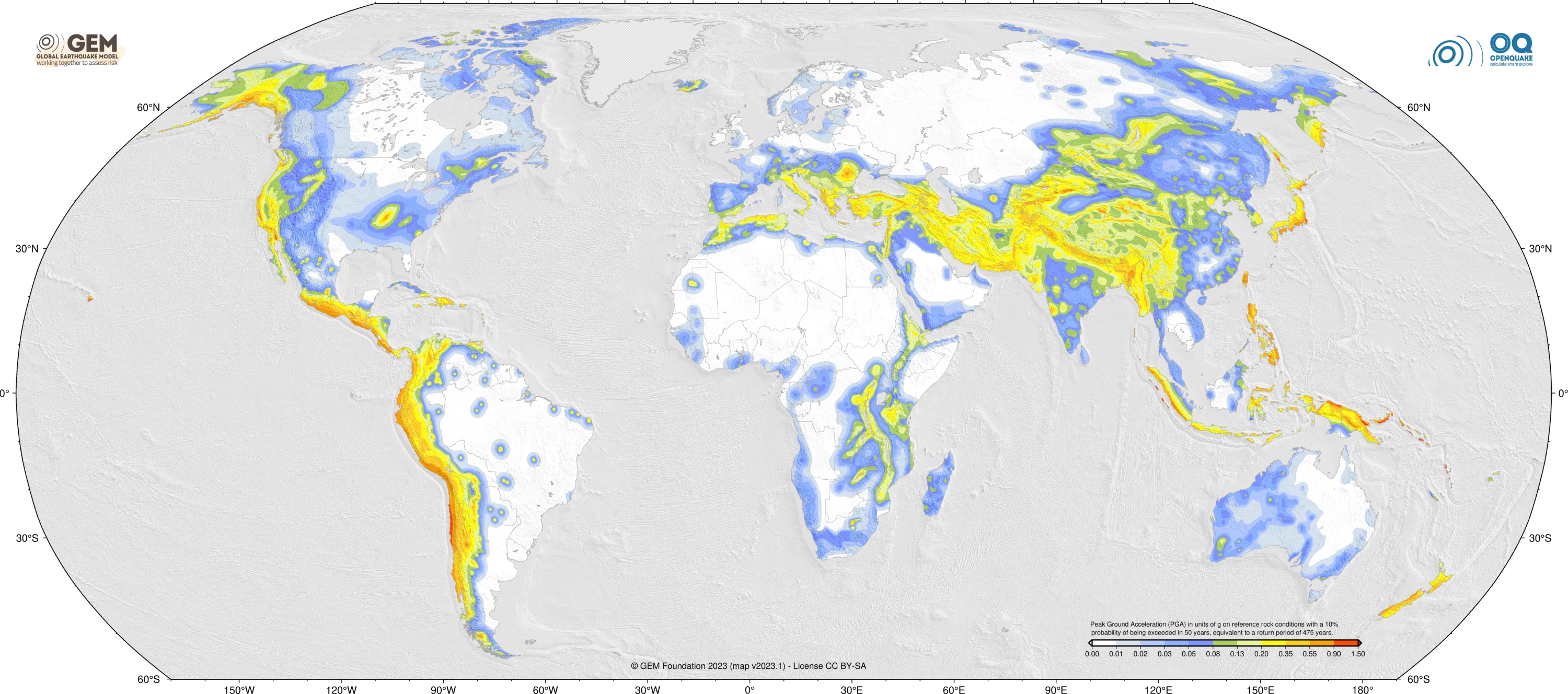
GEM_Global_Seismic_Hazard_Map_2023-1.jpg
Global earthquake hazard map. © GEM Foundation 2023 (map v2023.1) - License CC BY-SA
To better understand the impact of earthquakes, it is important to understand how they occur.
Earthquakes are a natural part of our planet’s dynamics. Due to the movement of large tectonic plates (at speeds of up to 15 cm/year), high pressure is exerted on the areas at the plate margins (e.g. subduction zones) and the areas behind them.
They occur when enormous stresses build up in the rock along plate boundaries or existing geological fault zones and are eventually released in a sudden jolt. In the process, blocks of rock suddenly shift against one another, and a small portion of the stored energy is released in the form of seismic waves.
Global earthquake activity reveals where such processes occur particularly frequently: Around 80% of the seismic energy released worldwide is concentrated along the Pacific Ring of Fire.n, wie sie entstehen.
Regions particularly prone to earthquakes include the west coasts of North and South America, Japan, Indonesia and the Mediterranean region, with countries such as Turkey, Greece and Italy.
Throughout history, earthquakes have repeatedly led to severe disasters. Some of the most significant and devastating events are summarised in the following overview.
In Austria, too, there have been isolated fatalities linked to earthquakes in the past. It is known, for instance, that people lost their lives in the earthquakes near Ried am Riederberg (1590), Hall in Tirol (1670), Innsbruck (1689), Arriach (1690) and Puchberg (1939).
These examples illustrate that the effects of earthquakes depend not only on their magnitude but also on the specific circumstances.
Most fatalities in earthquakes are not caused directly by the quake itself, but by its consequences (see table). The most common cause is the collapse of buildings due to poor or unsuitable construction methods. In addition to the failure of structures – including dams – the tremors can also trigger tsunamis, fires and landslides, which are further causes of severe damage and casualties.
Typical damage patterns are also evident in Austria: these include falling roof tiles, chimneys and other tall structural components and façade elements, which pose a significant danger particularly to people outdoors in the immediate vicinity of buildings. In general, older and historic buildings are considered particularly vulnerable to seismic shaking.
Earthquake-resistant construction is therefore a key factor in reducing damage and casualties. In Austria, this is regulated by relevant standards, in particular Eurocode 8 (ÖNORM EN 1998-1). This standard contains provisions for both the construction of new buildings and the improvement of the earthquake resistance of existing structures, and thus represents a central component of earthquake safety.
Furthermore, rapid assistance and well-prepared emergency response measures are crucial to keeping the number of casualties as low as possible following an earthquake.
Even earthquakes that occur far away are of significance to European institutions. Close international cooperation is necessary in order to be able to respond swiftly to such events.
As part of the EU multi-hazard project ARISTOTLE, the Earthquake Service of GeoSphere Austria, together with partner institutions from several countries, supports the European Commission’s Emergency Response Coordination Centre (ERCC) in Brussels.
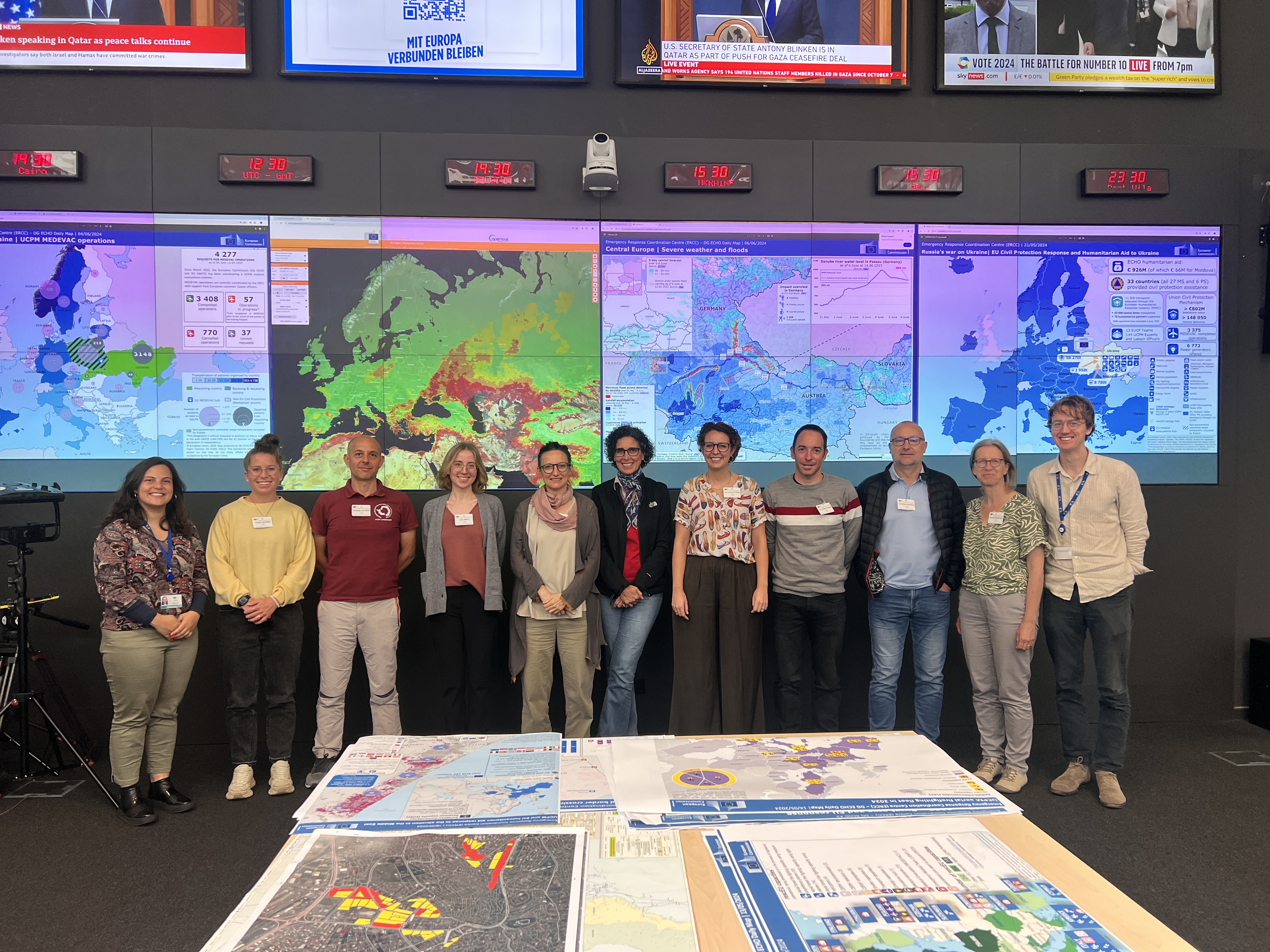
Aristotle.JPG
Training at the Emergency Response Coordination Centre (ERCC) in Brussels: As part of the EU ARISTOTLE project, experts specialising in various natural hazards are working together to prepare for international crisis situations. © GeoSphere Austria.
This involves analysing and assessing the impacts of natural phenomena such as earthquakes, volcanic eruptions, tsunamis, floods and extreme weather. The aim is to provide a sound basis for decision-making in the event of a crisis and, where necessary, to support international relief efforts.
This interdisciplinary approach brings together various specialist fields and helps to identify risks at an early stage and better assess the impact of natural disasters.
Austria is classified as a ‘moderately’ earthquake-prone area in Central Europe and exhibits continuous seismic activity. Around 1,000 to 2,000 earthquakes are recorded instrumentally each year, of which around 50 to 100 are felt by the population. Most earthquakes are noticeable as a distinct shaking, but approximately every two to three years, Austria must also expect minor damage to buildings caused by a stronger earthquake.
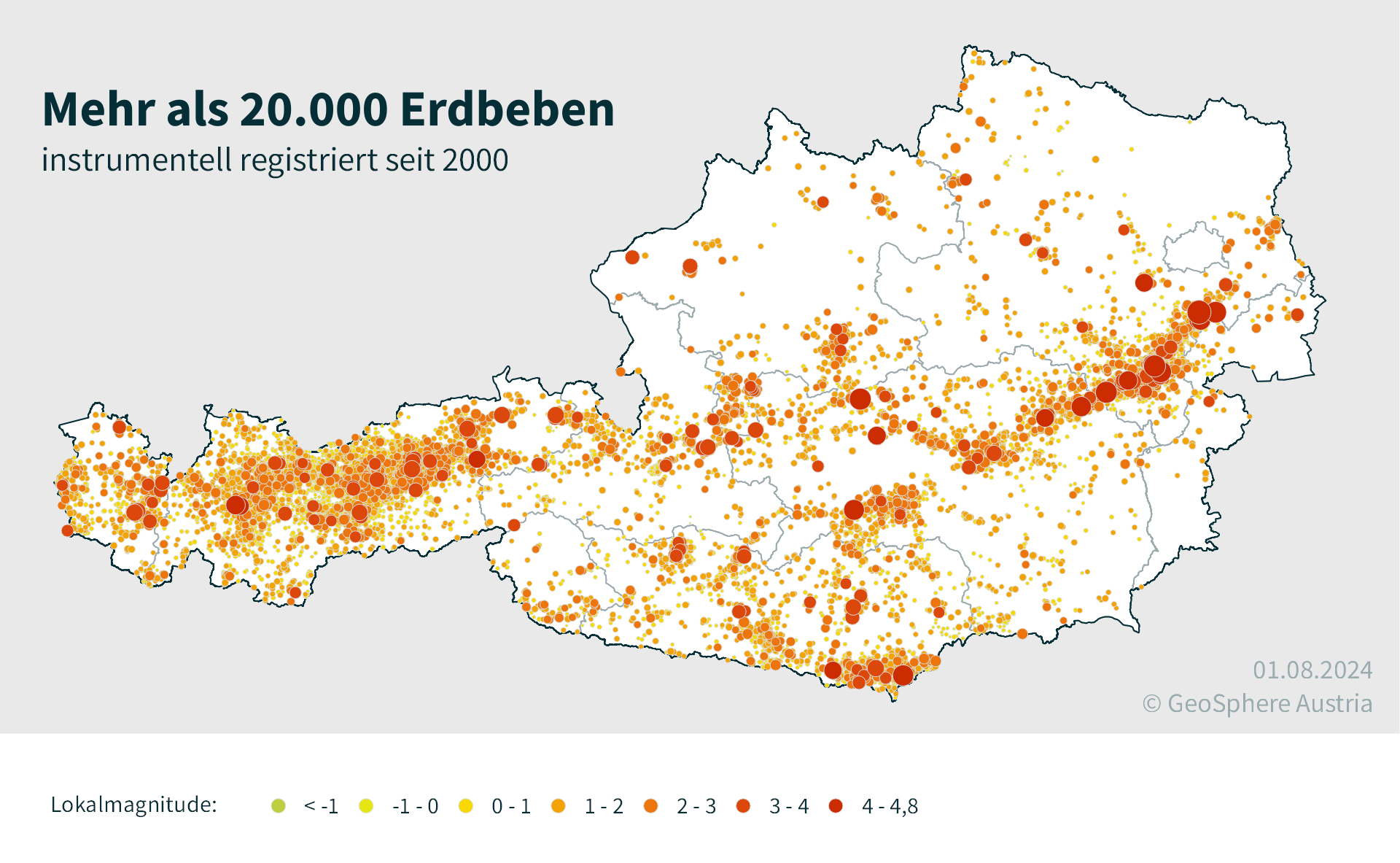
earthquakes_since_2000_v4.png
Earthquake activity in Austria since 2000. © GeoSphere Austria.
In principle, earthquakes can occur almost anywhere in Austria. However, as is clearly shown on the map of epicentres for all earthquakes since 2000, most earthquakes occur within the major tectonically active fault zones. These include:
- Vienna Basin
- Semmering and surrounding area
- Mur and Mürz valleys
- Inntal and its side valleys
- Rheintal in Vorarlberg
Even in an area with moderate seismicity, continuous monitoring is necessary to reliably document and classify seismic activity. To record earthquakes and other tremors both within and outside Austria, the Austrian Seismological Service operates a seismic monitoring network.
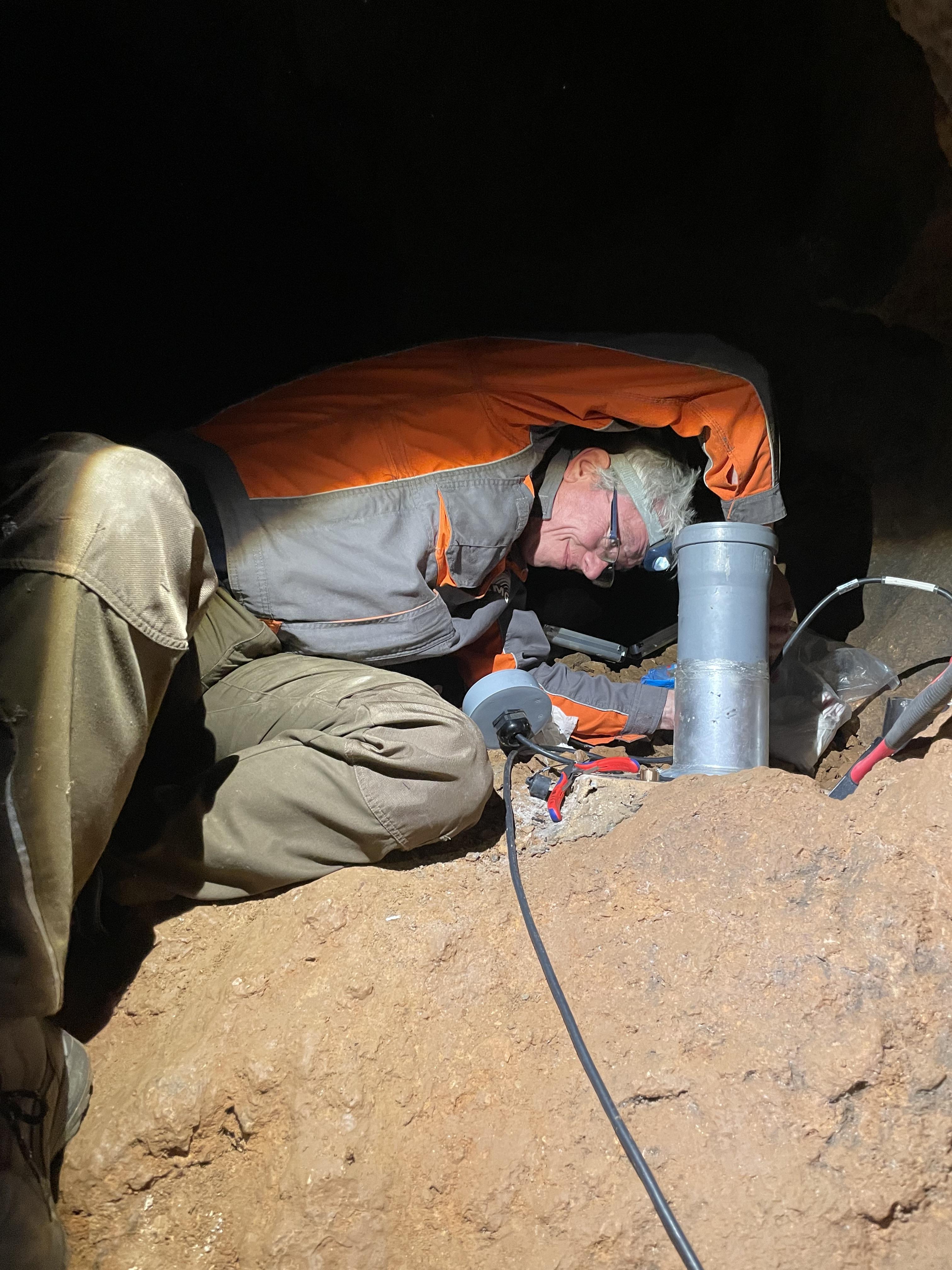
installation.jpeg
Installation of a seismic measuring station in a cave. © GeoSphere Austria.
Earthquakes do not stop at national borders. That is why GeoSphere Austria works closely with the seismological services of neighbouring countries and continuously exchanges measurement data. The integration of stations abroad provides additional data, enabling a significantly more precise determination of earthquake epicentres.
The Austrian seismic monitoring network is thus part of a European observation system and contributes to international earthquake monitoring by also passing data on to global data centres.
The International Day of Remembrance for Earthquake Victims serves as a reminder that behind every casualty figure lie human lives.
Earthquakes cannot be predicted or prevented. However, through scientific understanding, continuous monitoring and targeted preventive measures, their impact can be reduced and risks better assessed.
A key component of this exchange is also regular collaboration within the professional community: for instance, the D-A-CH Conference on Earthquake Engineering and Structural Dynamics takes place every two years in German-speaking countries, bringing together experts in seismology, earthquake engineering, and soil and structural dynamics to discuss and further develop the latest findings.
Understanding earthquakes means reducing risks – and protecting lives.
Translated with DeepL.com (free version)