
October saw the severe drought continue
GeoSphere Austria’s October summary: In the west, north and east of Austria, October was significantly warmer than south of the main Alpine ridge. There were a total of seven summer days – that is, days on which the temperature reached or exceeded 25 degrees – compared with a long-term average of three. Rainfall in Austria remained far too low in October as well – a precipitation deficit of 40 per cent was calculated for the national average.
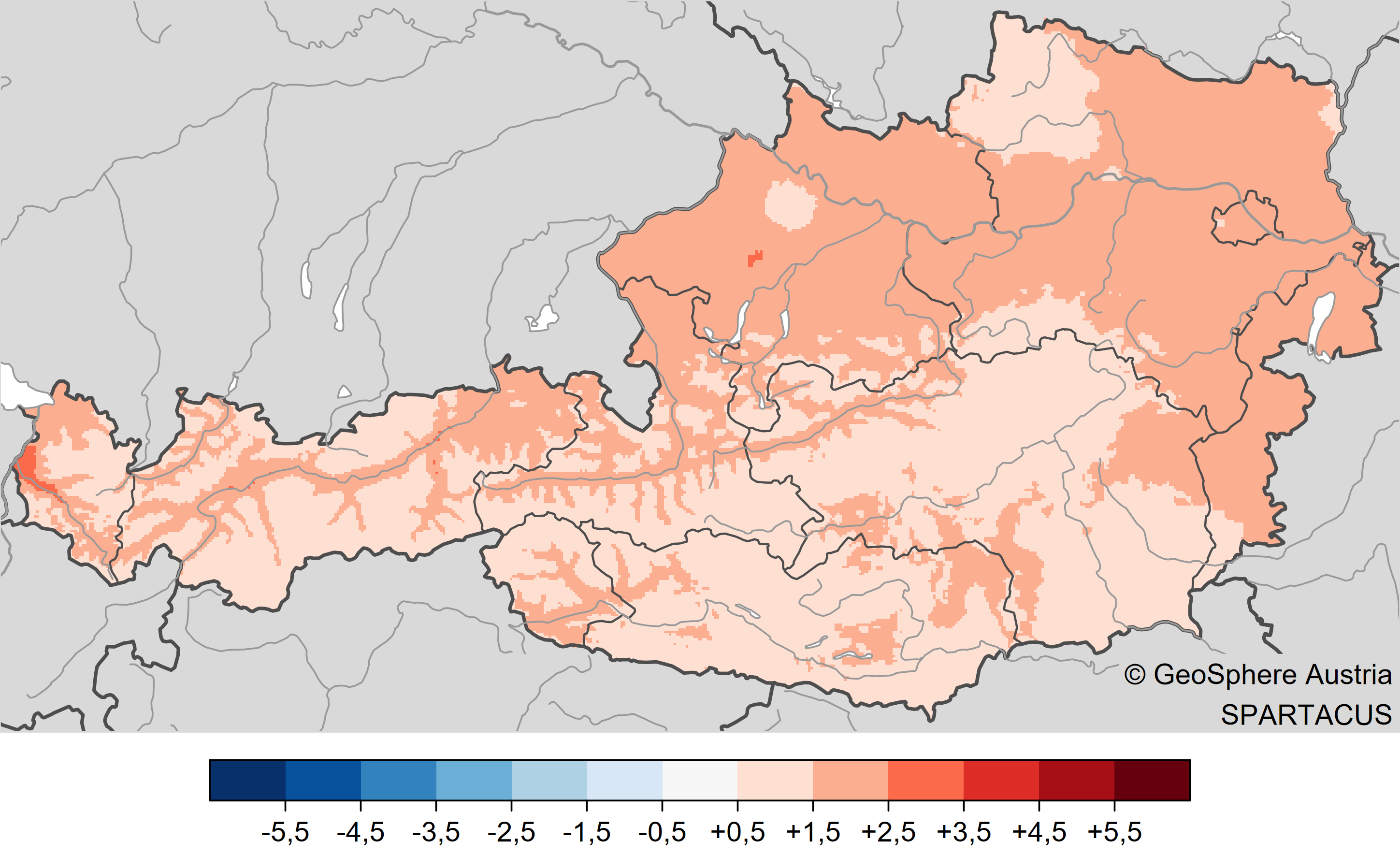
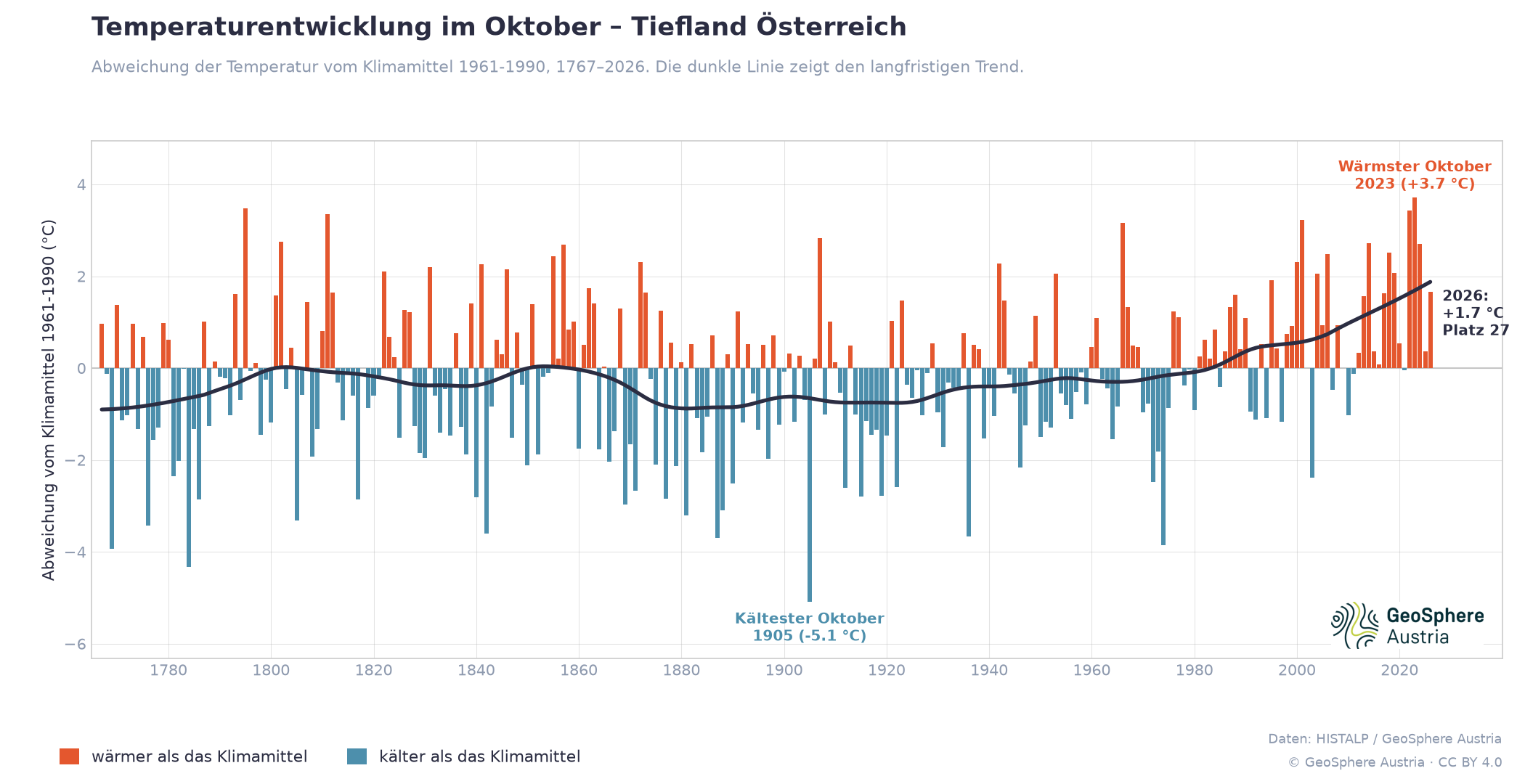
October 2026 began with above-average warmth. ‘Averaged over the entire month, it was 1.0 degrees warmer than the 1991–2020 climate average. This October was therefore the 27th warmest in the temperature time series, which now spans 260 years,’ summarises GeoSphere Austria climatologist Alexander Orlik. ‘It is not unusual for summer days to occur in October; on average, there are three days on which temperatures in Austria reach or exceed 25 degrees. In October 2026, there were seven such days.’ The highest temperature was recorded on 1 October in Wieselburg (Lower Austria, 259 m): 27.8 degrees. The coldest inhabited place in the country was Liebenau (Upper Austria, 846 m), where the GeoSphere Austria monitoring station recorded minus eight degrees on 23 October.
October2026_Temp_1961-1990.png
Temperature trends for October 2026 compared with the long-term average from 1961 to 1990. © GeoSphere Austria.
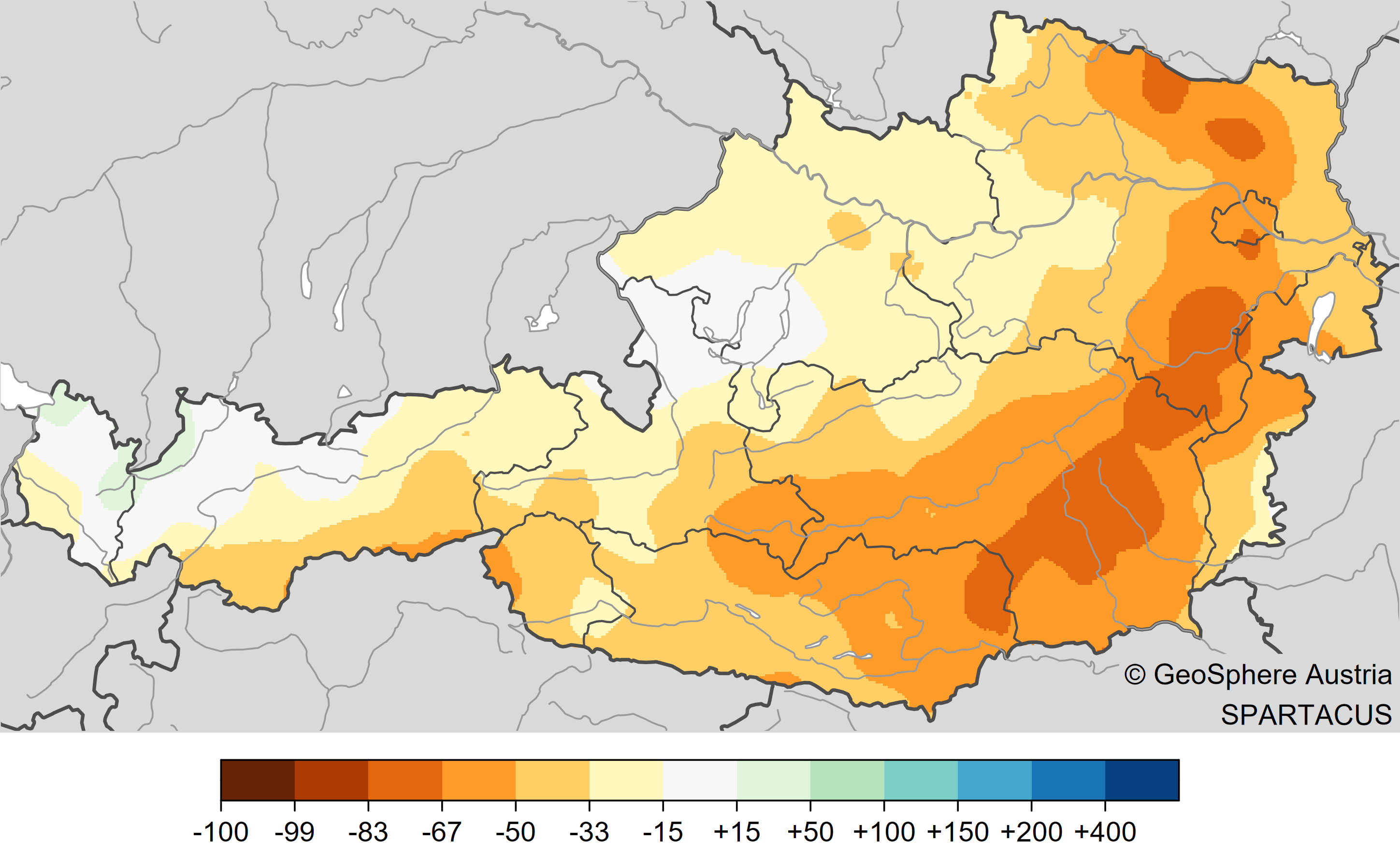
October was once again far too dry in Austria. The overall precipitation deficit stood at 40 per cent. Since the start of the year, around a third of the usual rainfall has been missing. ‘In absolute terms, this corresponds to a shortfall of 320 millimetres, or litres per square metre, since 1 January,’ explains Orlik. ‘If the deficit remains at one-third by the end of the year, 2026 would be the driest year on record.’ In Lower Carinthia, in Styria south of the River Enns, in Burgenland, in Vienna and in the eastern half of Lower Austria, 50 to 70 per cent less rain fell in October. The greatest deviations (70 to 85 per cent) from the climatic average occurred in a broad strip stretching from the Koralpe to the southern Vienna Basin. The least rainfall was recorded in Retz (Lower Austria). The nine millimetres recorded there represent a precipitation deficit of 74 per cent. At Schöckl near Graz, where ten millimetres of rain fell, this deficit was as high as 87 per cent.
October2026_precipitation_19912020.png
Precipitation trends in October 2026 compared with the long-term average for 1991 to 2020. © GeoSphere Austria.
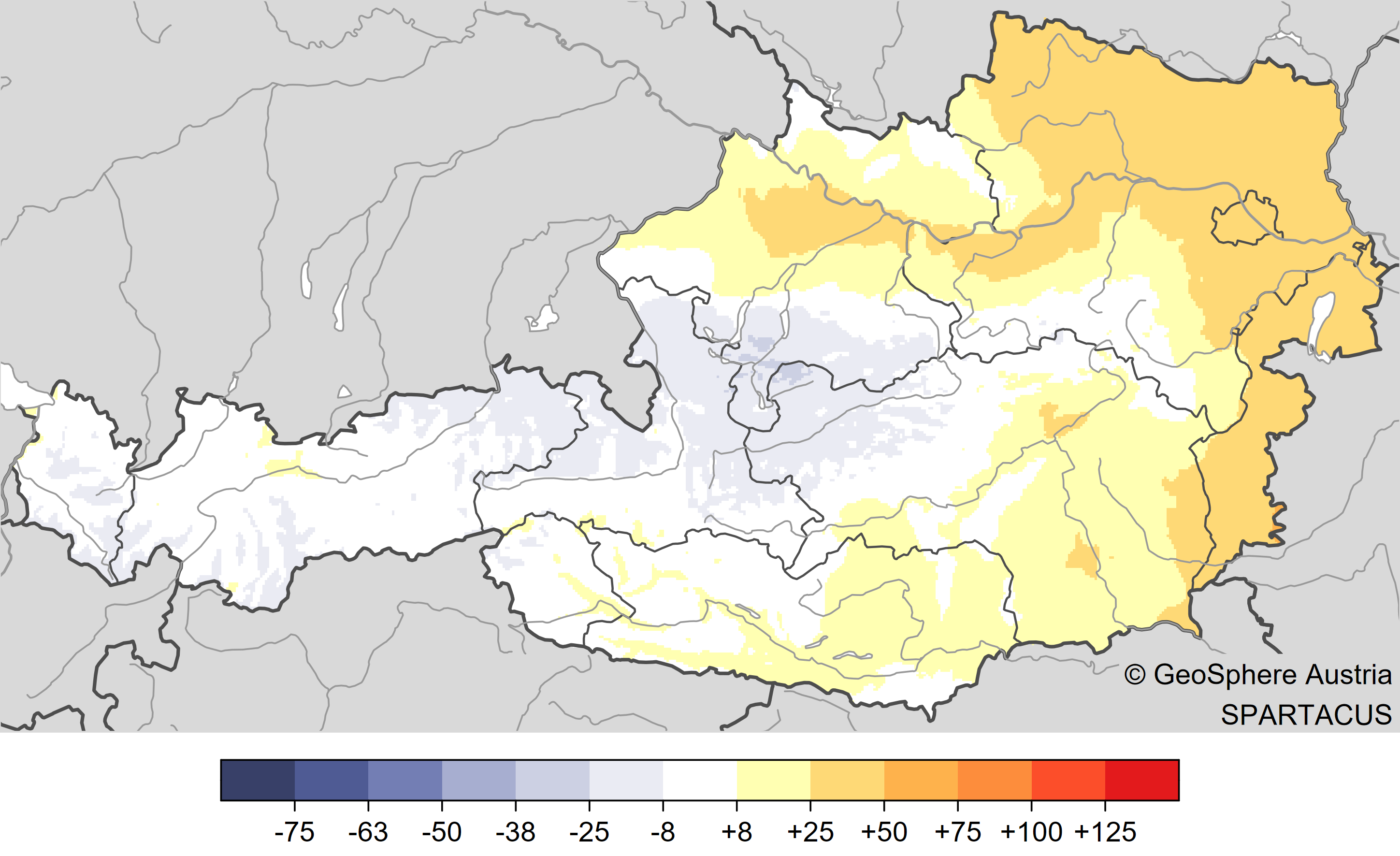
October was very sunny. On average across the region, the sun shone for 137 hours – 21 hours longer than the climate average for the reference period 1991 to 2020. The last time it was significantly sunnier was in October 2021. From the Innviertel to the Weinviertel, as well as in Burgenland and parts of Eastern Styria, the sun shone 25 to 50 per cent more frequently. In the Waldviertel and parts of the Weinviertel, there was even 50 to 70 per cent more sunshine compared with an average October.
October2026_sun_1961-1990.png
Trend in hours of sunshine in October 2026 compared with the long-term average for 1961 to 1990. © GeoSphere Austria.
October2026_temp_lowlands_1961-1990.png
Temperature trends (lowlands) in October compared with the long-term average for 1961 to 1990. © GeoSphere Austria.
Translated with DeepL.com (free version)