
April 2026 – 65 per cent rainfall deficit: Drought prevailed across Austria
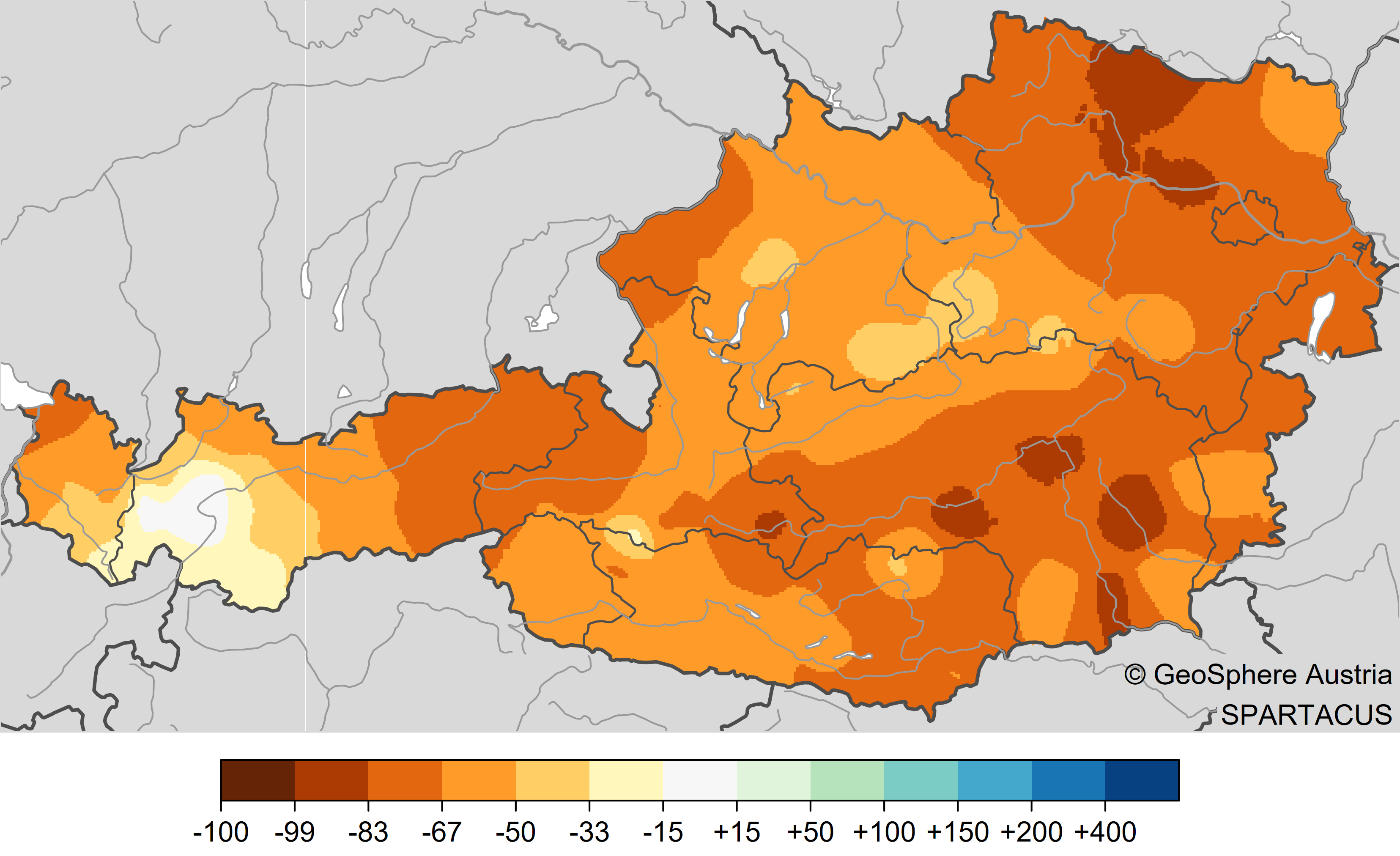
Preliminary April report from GeoSphere Austria: Only four Aprils since 1858 have been drier. In seven federal states, rainfall deficits were particularly high, ranging from -65 to -75 per cent. In some places, less than 15 per cent of the average April rainfall fell.
April 2026 was once again slightly too warm (+1.0 degrees above the 1991–2020 climate average) and fairly sunny. However, there were some dramatic deficits in precipitation. From Pongau to Flachgau, in Upper Austria, in northern Upper Styria and the Mostviertel, as well as in East Tyrol and Upper Carinthia, April 2026 saw 50 to 70% less rainfall. ‘In the Rhine Valley, the Tyrolean lowlands, Pinzgau, Lungau, Lower Carinthia, Styria along and south of the Mur and Mürz rivers, Burgenland, as well as in Vienna and large parts of Lower Austria, the precipitation deficits were particularly high at between 70% and 85%,’ summarises climatologist Alexander Orlik from GeoSphere Austria. In some places, less than 15% of the average April rainfall was recorded. These included Gleisdorf, Langenlebarn, Bruck an der Mur, Zeltweg, Retz, Vienna and Allentsteig.
April_2026_precipitation.png
Precipitation in April 2026: deviation of precipitation from the average compared to the 1991-2020 average. Evaluation with SPARTACUS data up to and including 29 April 2026. © GeoSphere Austria.
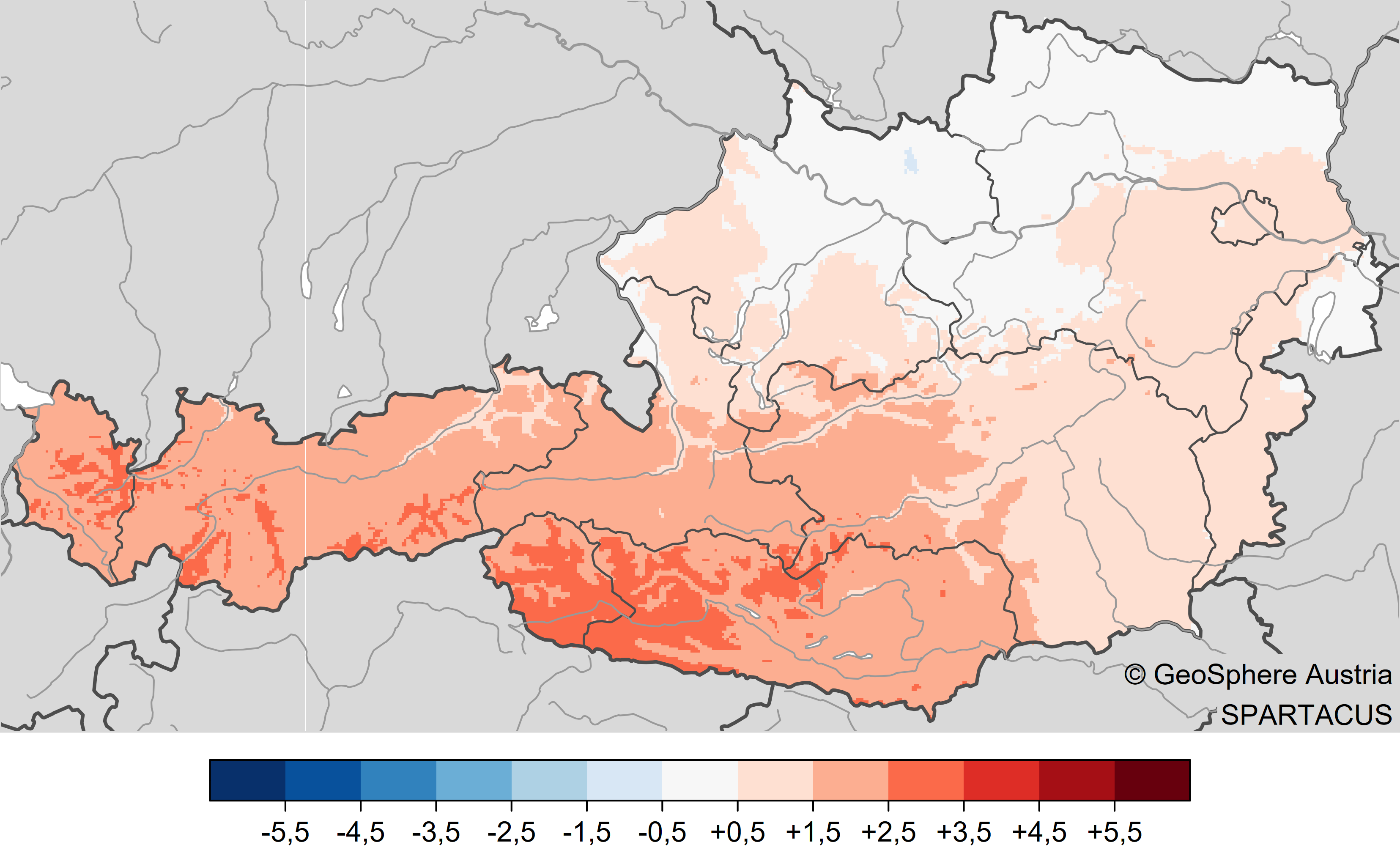
April 2026 was 1.0 °C warmer than the 1991–2020 climate average in the Austrian lowlands (HISTALP dataset) and 2.5 °C warmer than the significantly cooler 1961–1990 climate reference period. This places this April in 18th place in Austria’s 260-year history of temperature measurements. In the mountains, the deviations from the climate average were greater. The deviation from the 1991–2020 reference period reached +1.8 °C here, and +3.4 °C from the 1961–1990 climate average.
April_2026_temp.png
Temperature in April 2026: deviation of temperature from the average compared to the average for 1991–2020. Evaluation using SPARTACUS data up to and including 29 April 2026. © GeoSphere Austria.
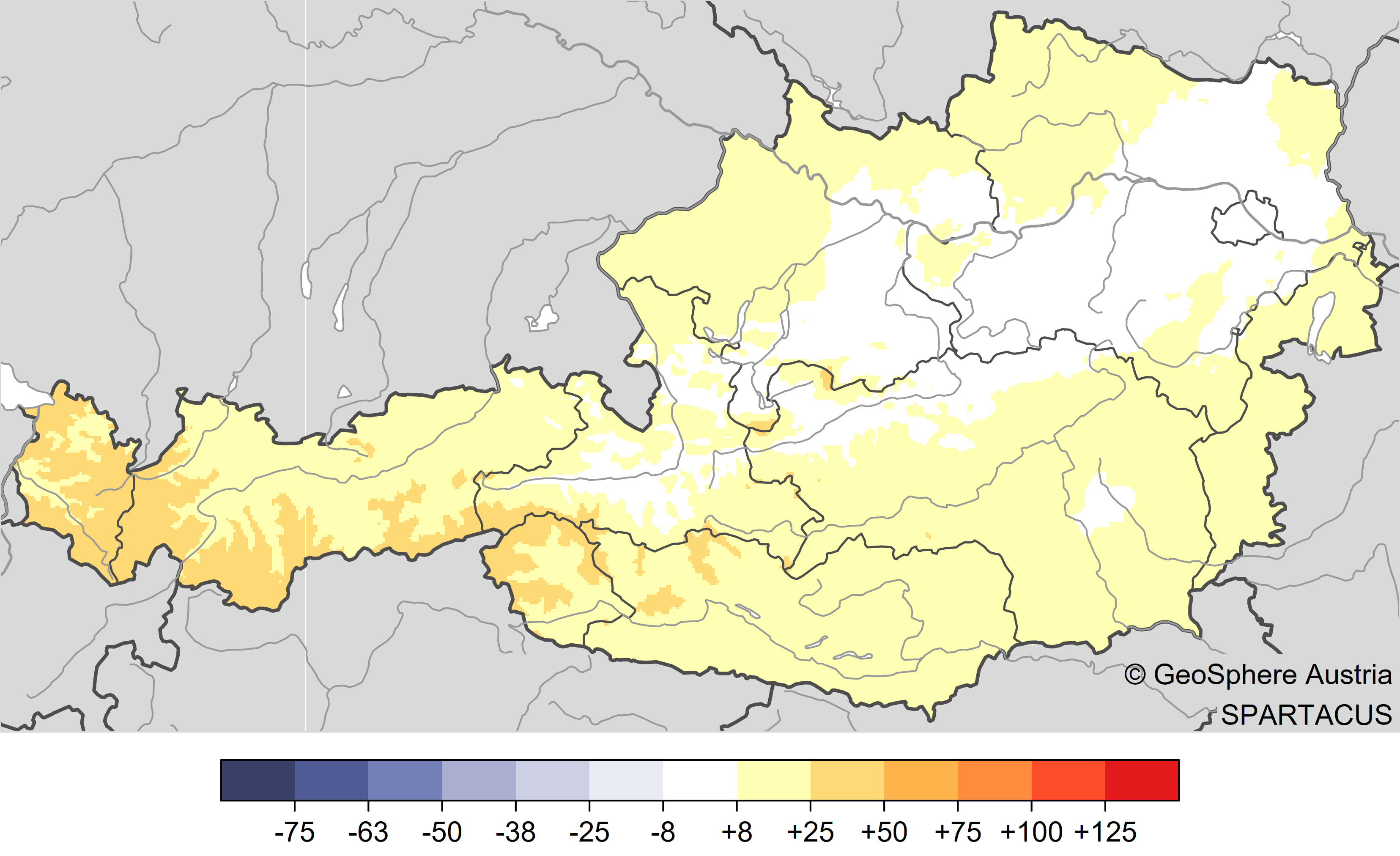
Across the whole of Germany, there was a 13% increase in sunshine. This made it just as sunny as April last year and the sunniest April since 2020, when the sun shone for 50% longer than in an average April. The sunniest areas were Vorarlberg, North Tyrol along the main Alpine ridge, East Tyrol and Upper Carinthia. There, the sun shone 25 to 35% more frequently compared to the reference period 1991–2020.
April_2026_sun.png
Sunshine duration in April 2026: deviation of sunshine duration compared to the 1991-2020 average. Evaluation using SPARTACUS data up to and including 29 April 2026. © GeoSphere Austria.
Many tree species began flowering earlier this year compared to the Austrian average for 1991 to 2020. For example, the flowering of sweet cherry and weeping birch began six days earlier. The flowering of lilac also started early. The flowering of the wild strawberry, on the other hand, was delayed this year. The emergence of leaves on the small-leaved lime was five days earlier, whereas that of the common hazel was very close to the 1991–2020 average.
The first cuckoo call was heard two weeks earlier this year than the average. This is the earliest date recorded in the observation series for the first cuckoo call. The first cockchafers of the year have also already been spotted.
Translated with DeepL.com (free version)