
Climate summary for July 2026: Two degrees warmer than the 1991–2020 average – and extremely dry
Preliminary July summary from GeoSphere Austria: At 40.3 degrees in Wieselburg (Lower Austria), the all-time July record set in 1983 was significantly surpassed. However, Austria – and the east in particular – had to contend not only with extreme temperatures in July, but also with severe drought. At some monitoring stations, the rainfall deficit stood at 90 per cent.
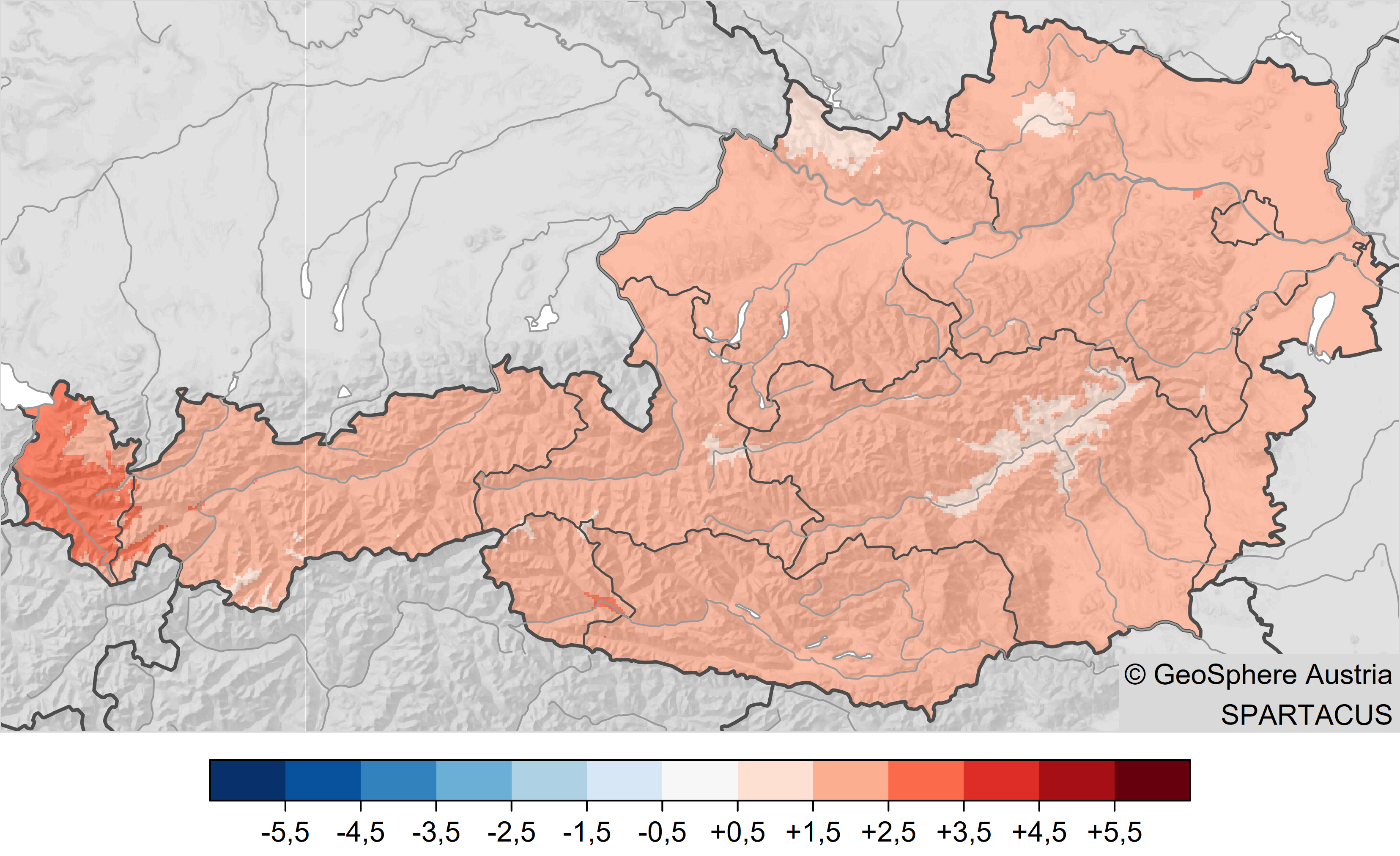
It was the fourth-warmest July in 260 years of recorded history. Only the July months of 2006, 2015 and 2024 were, on average, even warmer. In terms of peak temperatures, however, July 2026 was the clear winner: On 31 July, the GeoSphere monitoring station in Wieselburg (Lower Austria) recorded 40.3 degrees – 0.6 degrees higher than the previous all-time July record set in 1983 (39.7 degrees in Dellach im Drautal). Many monitoring stations had never recorded such high temperatures before – most notably the one in Vienna-Stammersdorf: 40.1 degrees marked an all-time record for the federal capital.
July_2026_Temp_compare_91-20.png
Temperature in July 2026: Deviation of the temperature from the 1991–2020 average. Analysis based on SPARTACUS data, including 31 July 2026. © GeoSphere Austria.
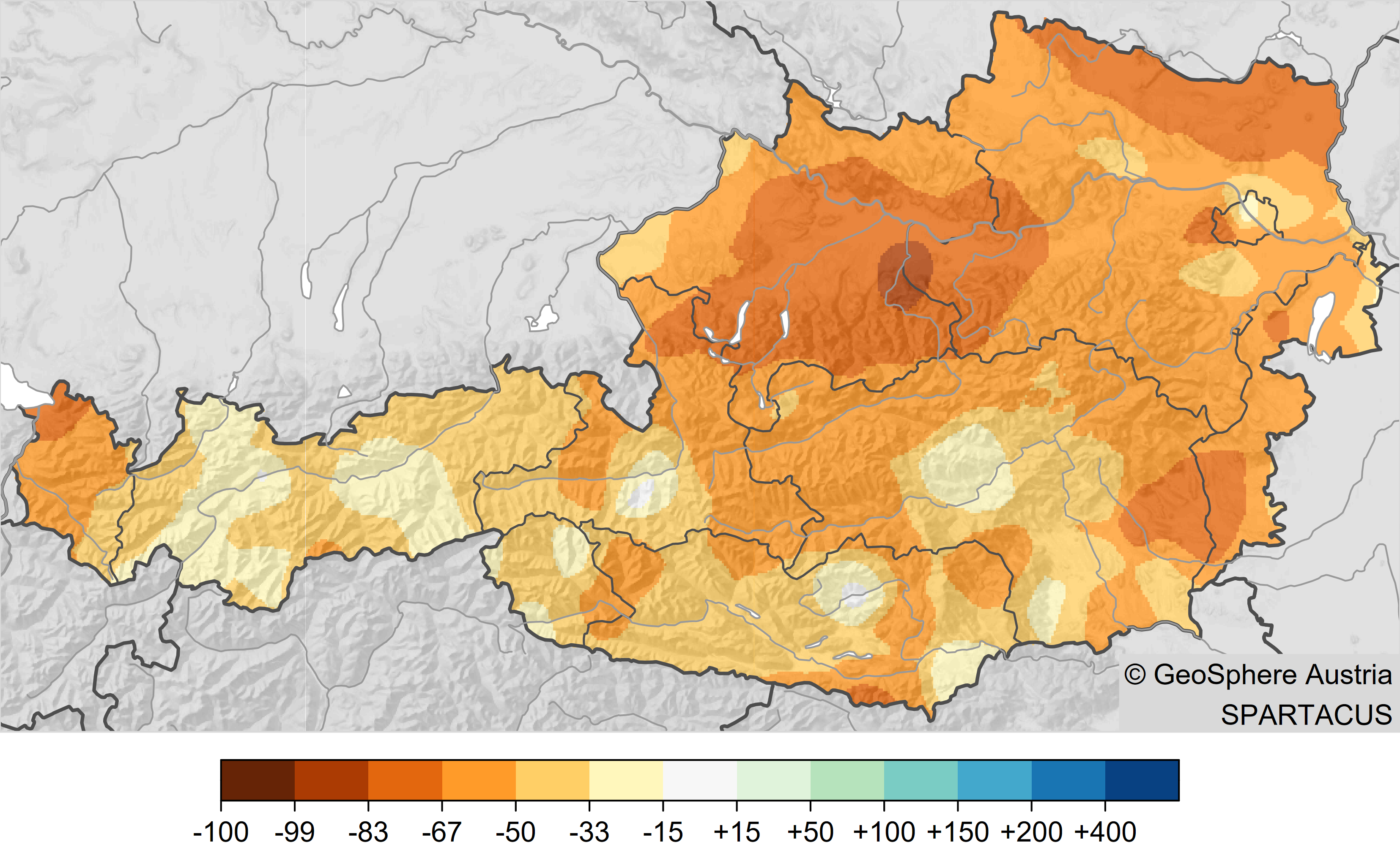
On 17 July, 46 millimetres of rain fell within an hour at the Hohe Warte in Vienna – the remaining 18 millimetres of the total July total were spread over the rest of the month: this is a good example of the precipitation pattern in July 2026. Occasional heavy thunderstorms, but overall significantly too little rain. Even at Austria’s wettest location in July, the Schmittenhöhe (S, 1,956 metres above sea level), there was a precipitation deficit of three per cent, with 188 millimetres recorded. The driest location was Podersdorf on Lake Neusiedl (B, 116 metres above sea level), with ten millimetres. Massive rainfall deficits of between 50 and 80 per cent were recorded across the whole country; the largest were at Wachtberg near Steyr (384 metres above sea level) at minus 91 per cent, followed by the GeoSphere measuring stations at Vienna-Mariabrunn (225 metres) at minus 89 per cent and Wels (309 metres) at minus 87 per cent. July 2026 is therefore one of the five JULYs with the lowest precipitation levels in the past 169 years.
July_2026_precipitation_compare_91-20.png
Precipitation in July 2026: Deviation of precipitation from the mean compared with the 1991–2020 mean. Analysis using SPARTACUS data up to and including 31 July 2026. © GeoSphere Austria.
July_2026_sun_compare_91-20.png
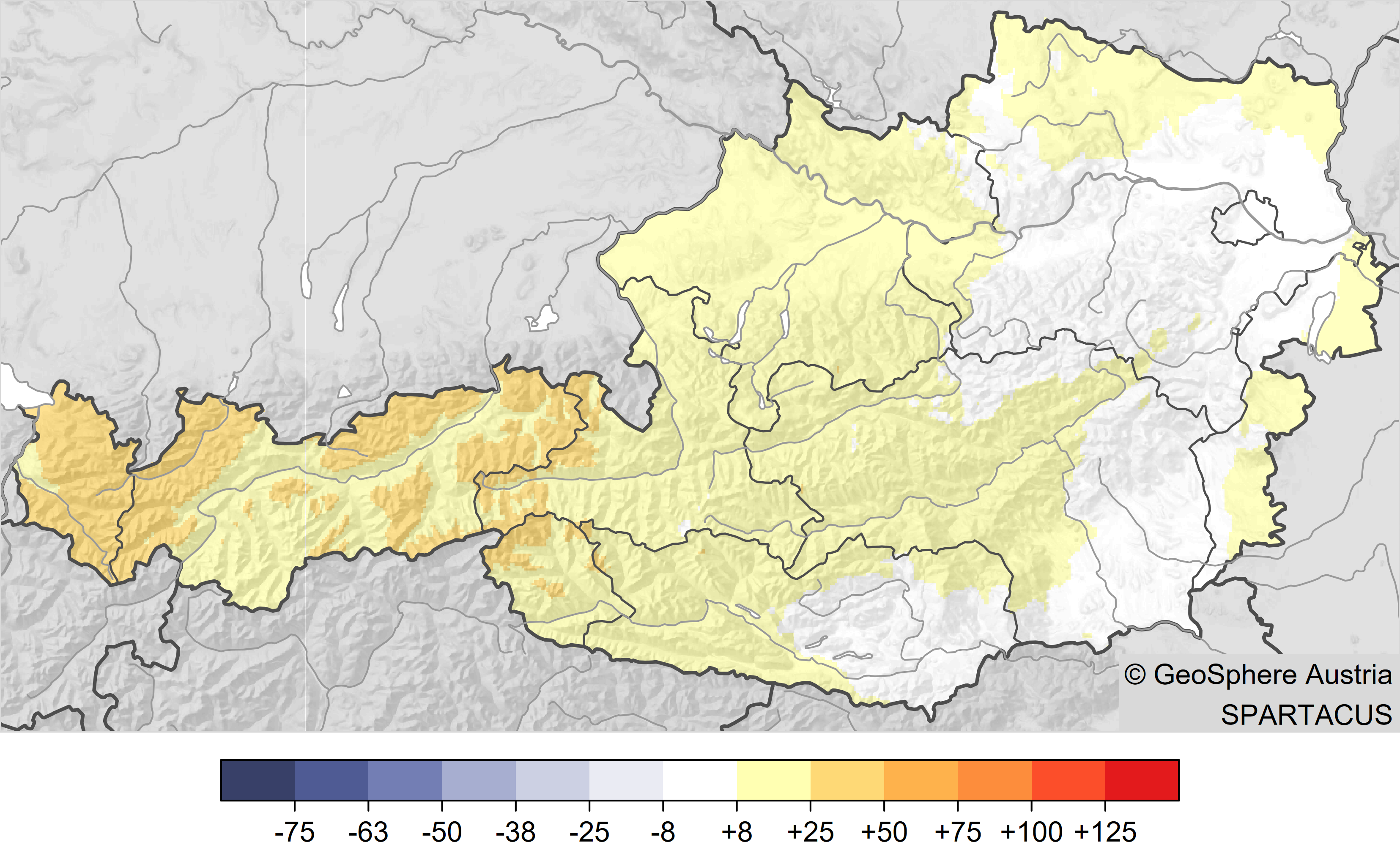
Sunshine duration in July 2026: Deviation of sunshine duration from the 1991–2020 average. Analysis based on SPARTACUS data up to and including 31 July 2026. © GeoSphere Austria.
In July, apricots ripened in many places. According to observations by GeoSphere Austria, ripening began around four days earlier than the average for the years 1991 to 2020. Compared with the period 1961–1991, the ripening of apricots has, on average, occurred around 20 days earlier. The wheat harvest also took place earlier than the average for the years 1991 to 2020. In terms of phenological seasons, July 2026 was in the height of summer. With the ripening of black elderberries, late summer is already beginning to make its presence felt in some places.
Translated with DeepL.com (free version)